

Click Therapeutics - Episodic Future Thinking
Helping users strengthen motivation and goal adherence
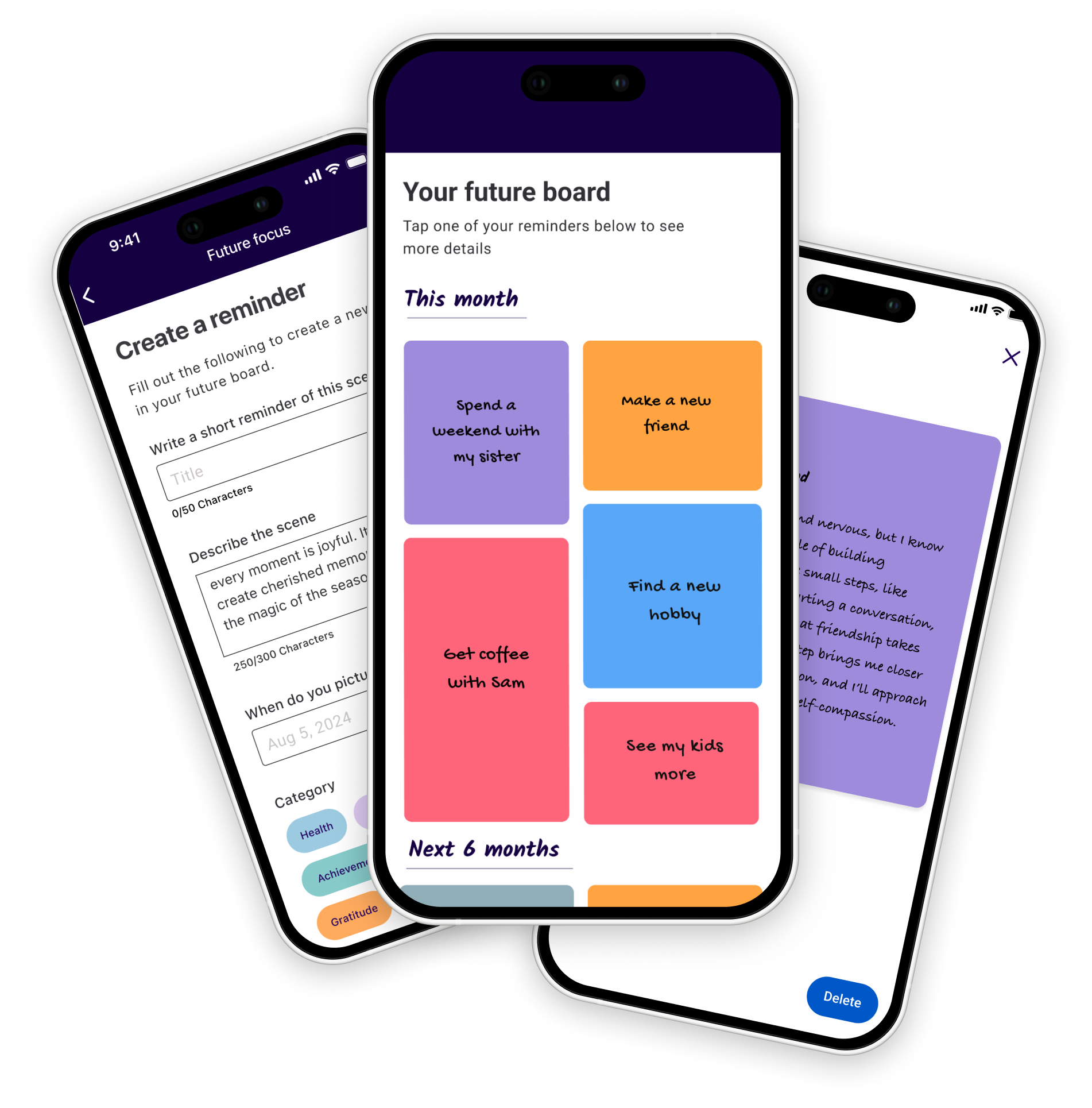
Project background
At Click Therapeutics, I led the design of a feature based on Episodic Future Thinking (EFT), a behavioral technique that helps people in recovery strengthen motivation by vividly imagining positive future moments.
A problem
people in recovery often struggle with is staying motivated because long-term rewards feel distant, while immediate cravings and stressors dominate attention. Existing digital therapies provide structured activities but rarely create a strong emotional connection to future goals.
The goal
was to design an experience that helps users visualize meaningful future events, feel emotionally connected to their progress, and build lasting motivation.
As a result, 70% of participants said they would use the app daily; users reported feeling more in control and encouraged by the idea that their cognitive function could improve over time.
Insights from early testing secured client buy-in and Phase 2 funding; testing showed notable gains in task accuracy and response speed.
My role: Lead Product Designer | Duration: 4 months | Team: UX Research, Product, Clinicians, Engineers
What is Episodic Future Thinking (EFT) and how does it work?
Episodic future thinking (EFT) is the ability to mentally "pre-experience" future events by simulating them in detail, including the emotions and contexts associated with them.


First steps
Research
Research goal was to understand what motivates people during recovery
Identify emotional drivers behind commitment and follow-through.
We interviewed 50 participants: patients, caregivers, and clinicians.
“Sometimes you can't think about even hours later because you're thinking so much about the moment. So I love this future focus.”
- Research participant patient
“I could see myself doing that a few times a week. If I'm being like, anxious and needing to calm down and kind of center myself. I could see myself doing that.”
- Research participant patient
Key findings:
Users were highly motivated but struggled to maintain momentum during moments of stress or craving.
Many found existing digital tools overwhelming or impersonal, making it hard to find timely support.
Users wanted quick, compassionate guidance rather than lengthy educational content.
Trust and emotional tone were critical; users responded best to calm, empathetic language and visuals.
Clinicians emphasized the need for consistent, low-friction tools to reinforce recovery routines between sessions.
These findings shaped our problem statement:
How might we help people in recovery stay motivated by visualizing meaningful future moments?
Goals
The goal was to translate the science of Episodic Future Thinking into a motivating, emotionally resonant experience that helps users visualize and stay connected to their future goals.

Vision board - testing and validating iterations
A Vision Board is a place where all future moments are stored.
Based on user interviews, I designed several iterations and tested to find the best way to store patients' entries.
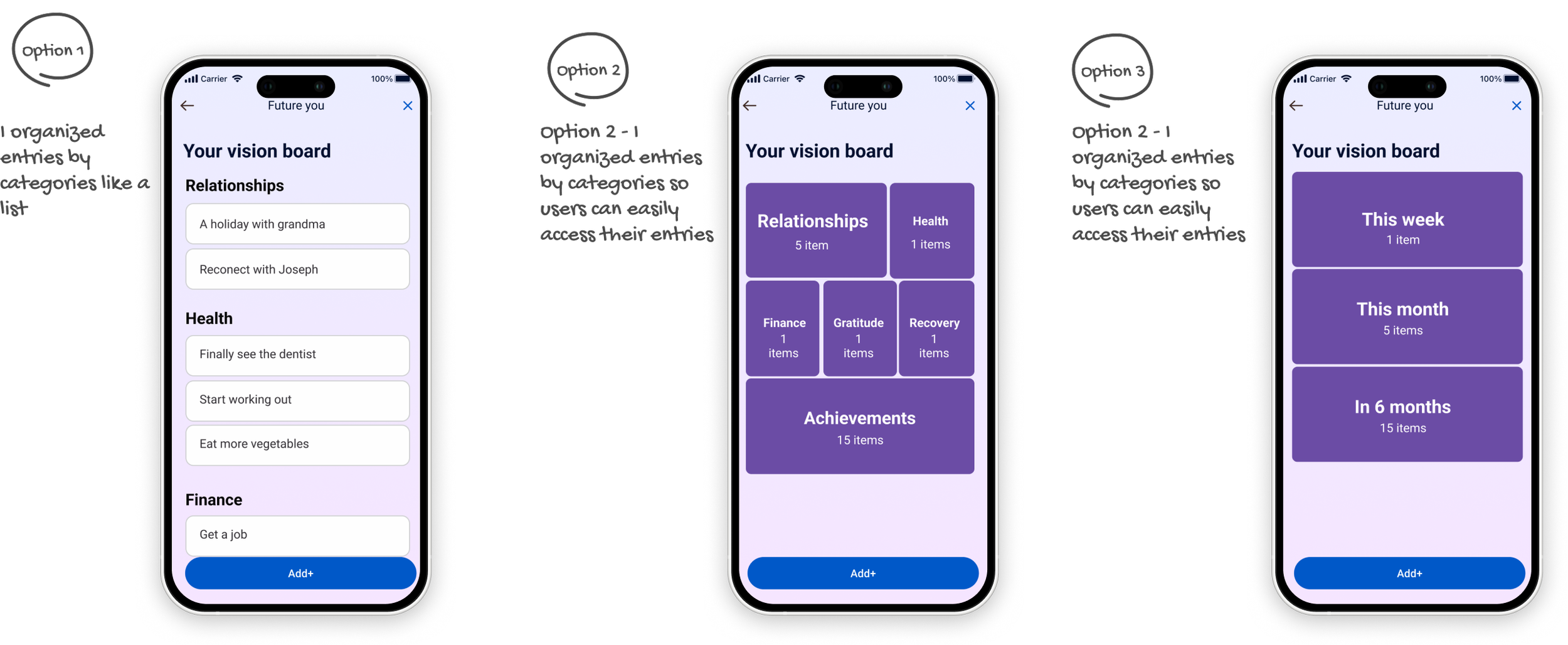
Participants thought they might want to revisit the Vision Board daily to reflect on their progress and stay motivated.
They thought of it in terms of categories, though when presented with options on how the board might look and be organized, preferences were scattered over all options.
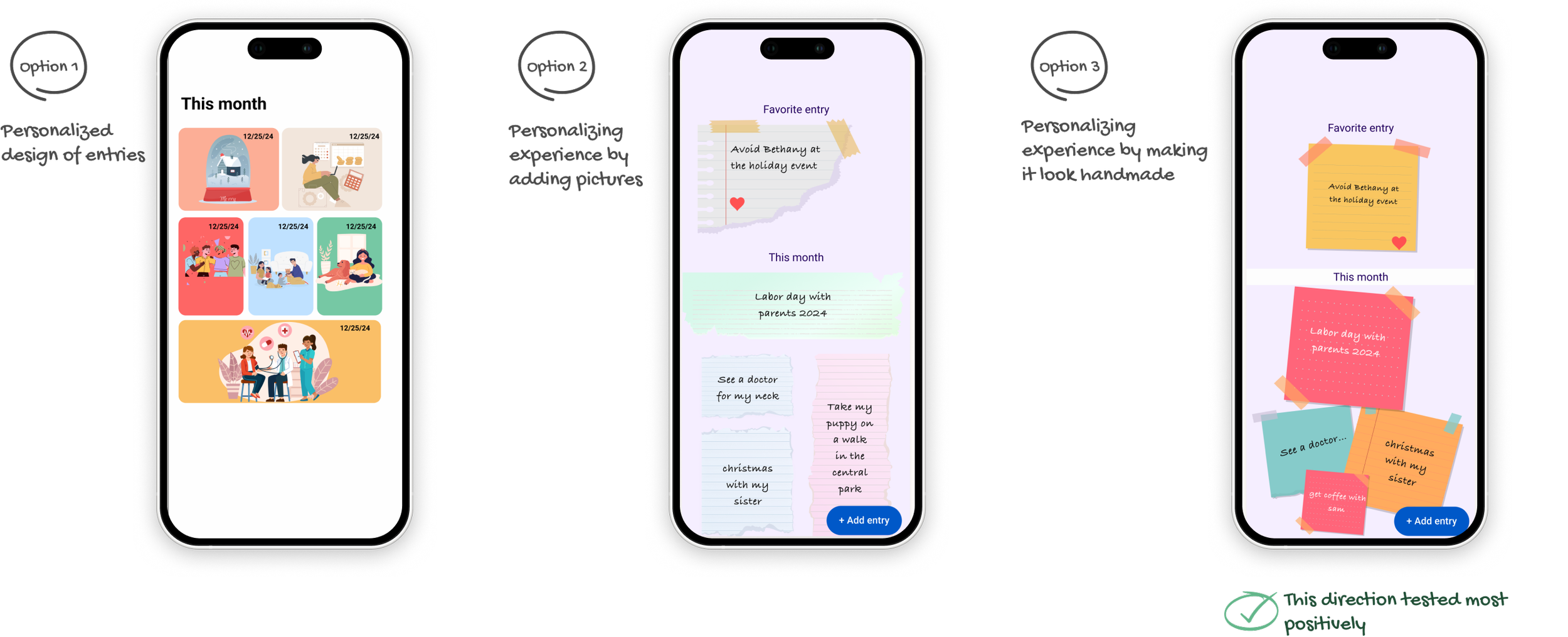
Personalization
During user interviews, we heard that patients wanted more personalized experiences, prompting design explorations. However, legal constraints barred the use of pictures. The images shown reflect some customization options we explored despite these limitations.
Iterating and validating final designs
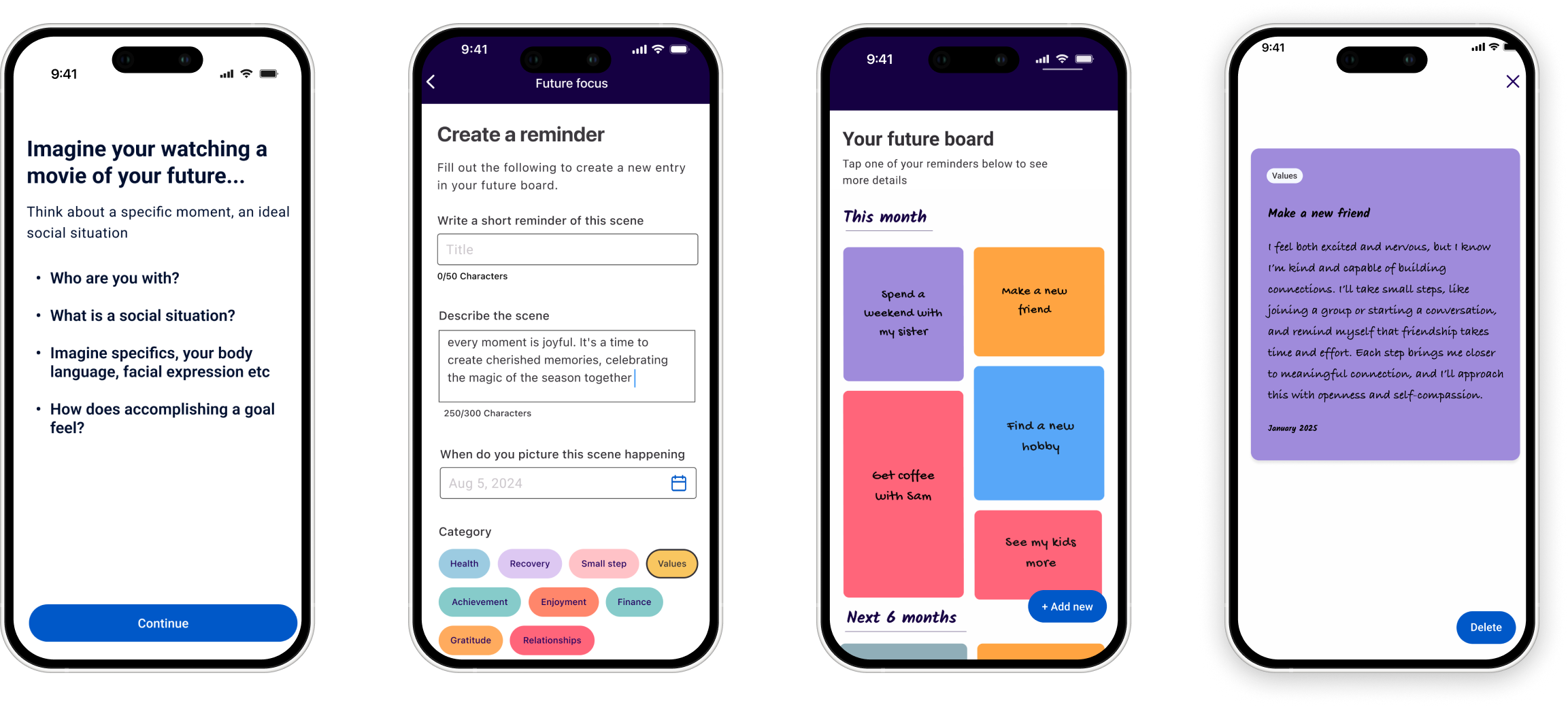
I designed the final experience to guide users through future-thinking exercises in a way that feels calm, clear, and encouraging.
Research showed that users often felt overwhelmed by goal-setting tasks, so I focused on creating a supportive interface that reduces cognitive load. Thoughtful use of color, motion, and microinteractions reinforces a sense of focus and reassurance, while clear progress indicators were introduced to help users track their growth and stay intrinsically motivated throughout each session.
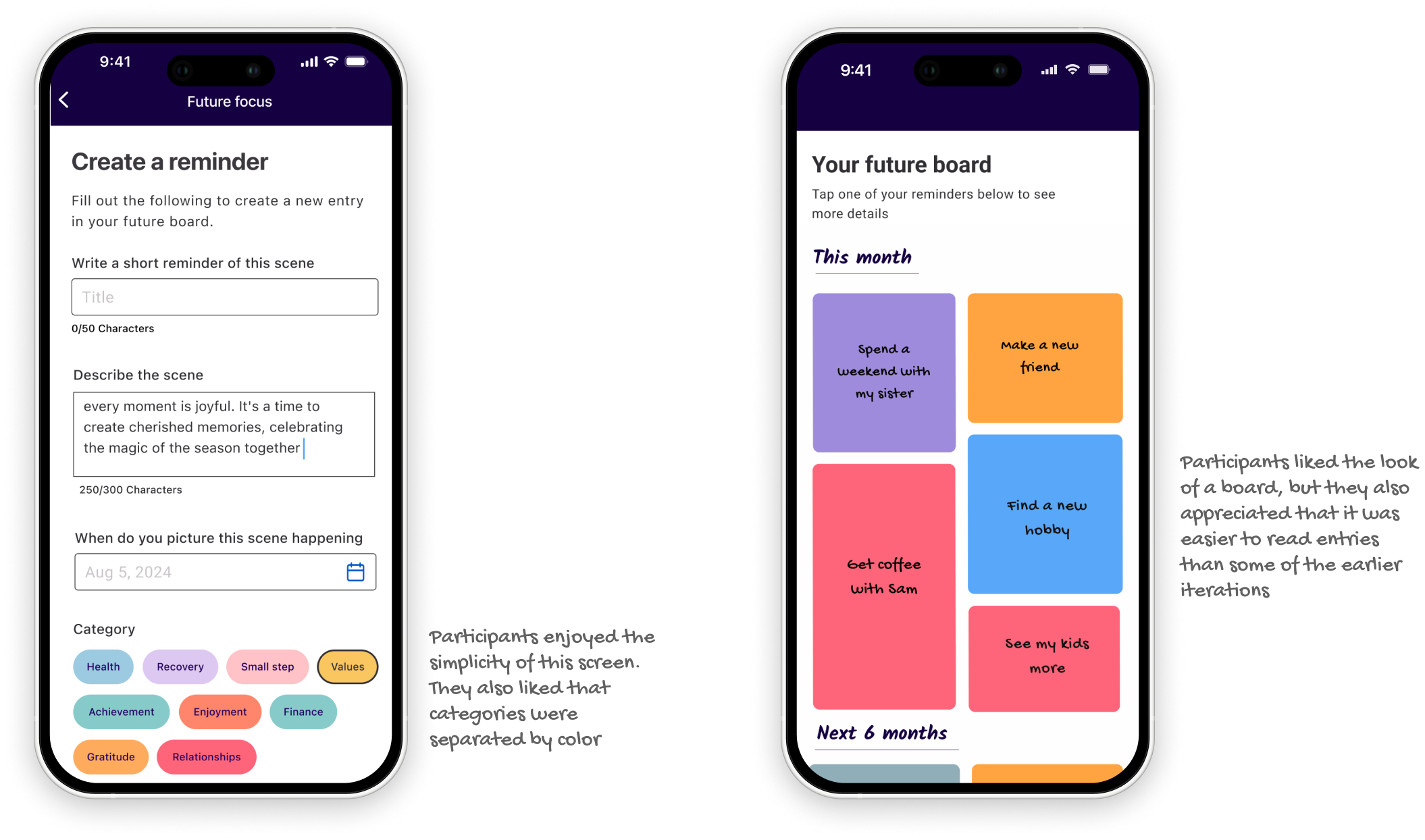
“I like the future-focused thinking right off the bat. Thinking about the future gives you a sense of hope. Sometimes you can't think about even hours later because you're thinking so much about the moment.“
- Research Patient
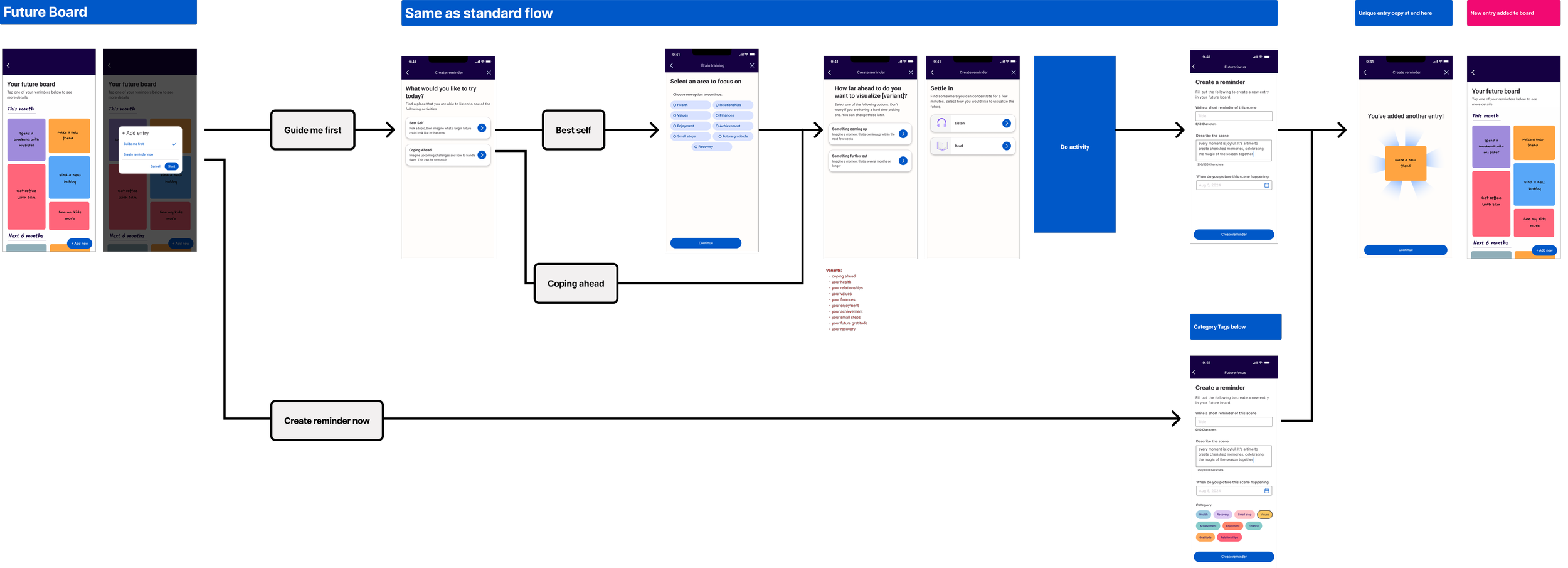
User flows
User journeys outlined how participants moved through reflection, visualization, and goal-setting. These insights shaped key moments of motivation and focus throughout the EFT experience.
Outcomes and Results
80% of participants said the EFT feature helped them stay motivated and connected to their recovery goals.
70% reported they would use the tool regularly as part of their daily reflection or journaling routine.
User Impact:
Participants described feeling more hopeful and focused after visualizing meaningful future moments. The simple flow from creating a goal to seeing it on their Future Board made progress feel tangible and emotionally rewarding.
Business Impact:
Early feedback validated EFT as an effective behavioral strategy for sustaining motivation between therapy sessions. The results informed clinical roadmap decisions and helped secure buy-in for Phase 2 expansion and further product investment.