

Cognitive training experience for behavior change
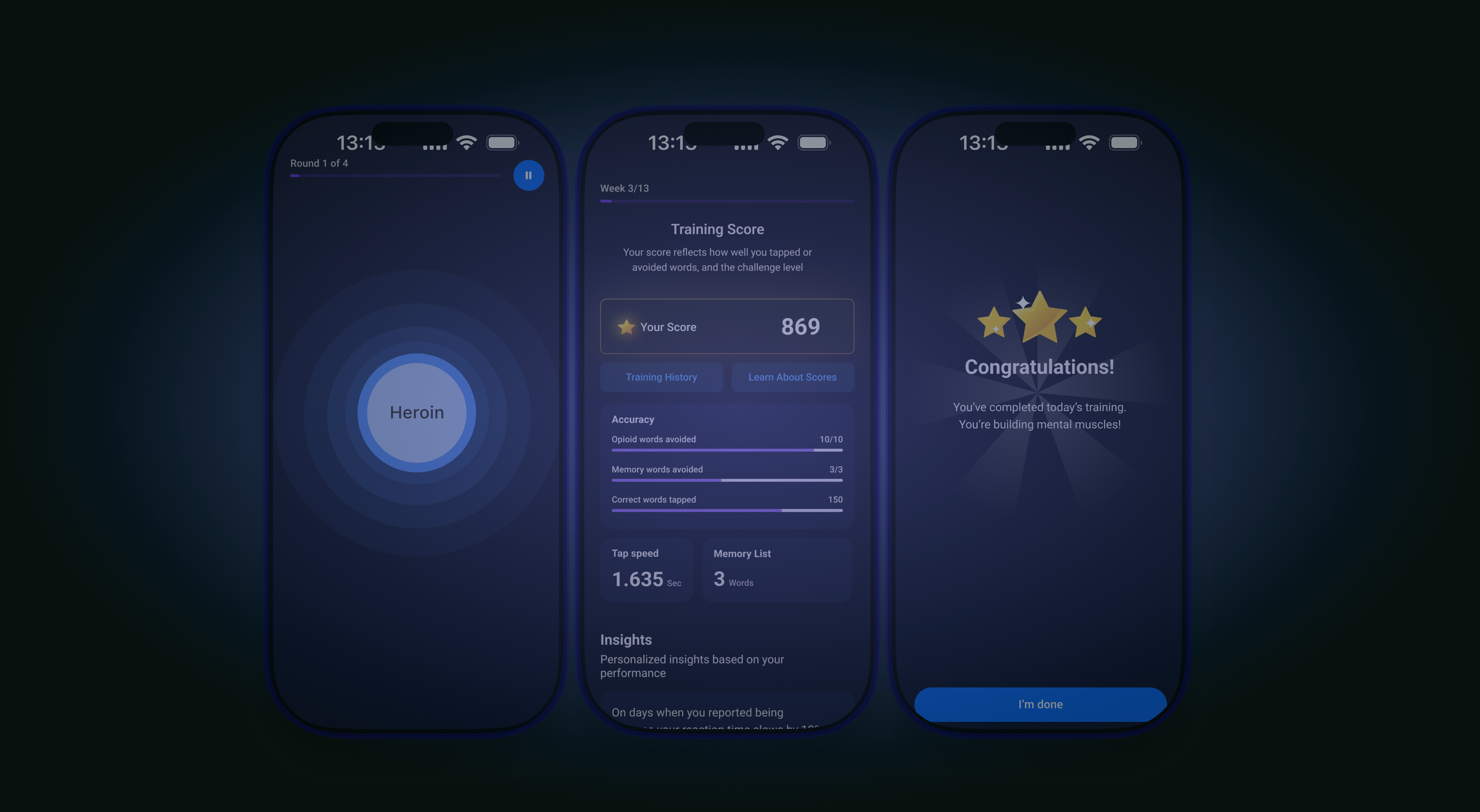
I led the design of a cognitive brain training activity, Go/No-Go, the tool that boosts motivation and impulse control. It blends cognitive behavioral therapy principles with accessible and gamified design. This feature is part of a therapeutic app designed to rebuild focus and self-control during opioid recovery.
Problem:
People in recovery often struggle to stay motivated because long-term rewards feel distant, while immediate cravings and stressors dominate attention.
Goal:
Create a simple, easy-to-use therapeutic game that never triggers patients and clearly shows their recovery progress.
Outcome:
As a result, 80% of research participants said they would use the app daily, reporting feeling more in control and optimistic about their progress. Engagement gains and positive outcomes helped secure Phase 2 funding for continued development.
My role: Lead Product Designer
Duration: 6months
Team: 1 Product Designer, 1 UX Researcher, 2 Product Managers, 2 Clinicians, 6 Engineers
What is Go No/go and how does it work?
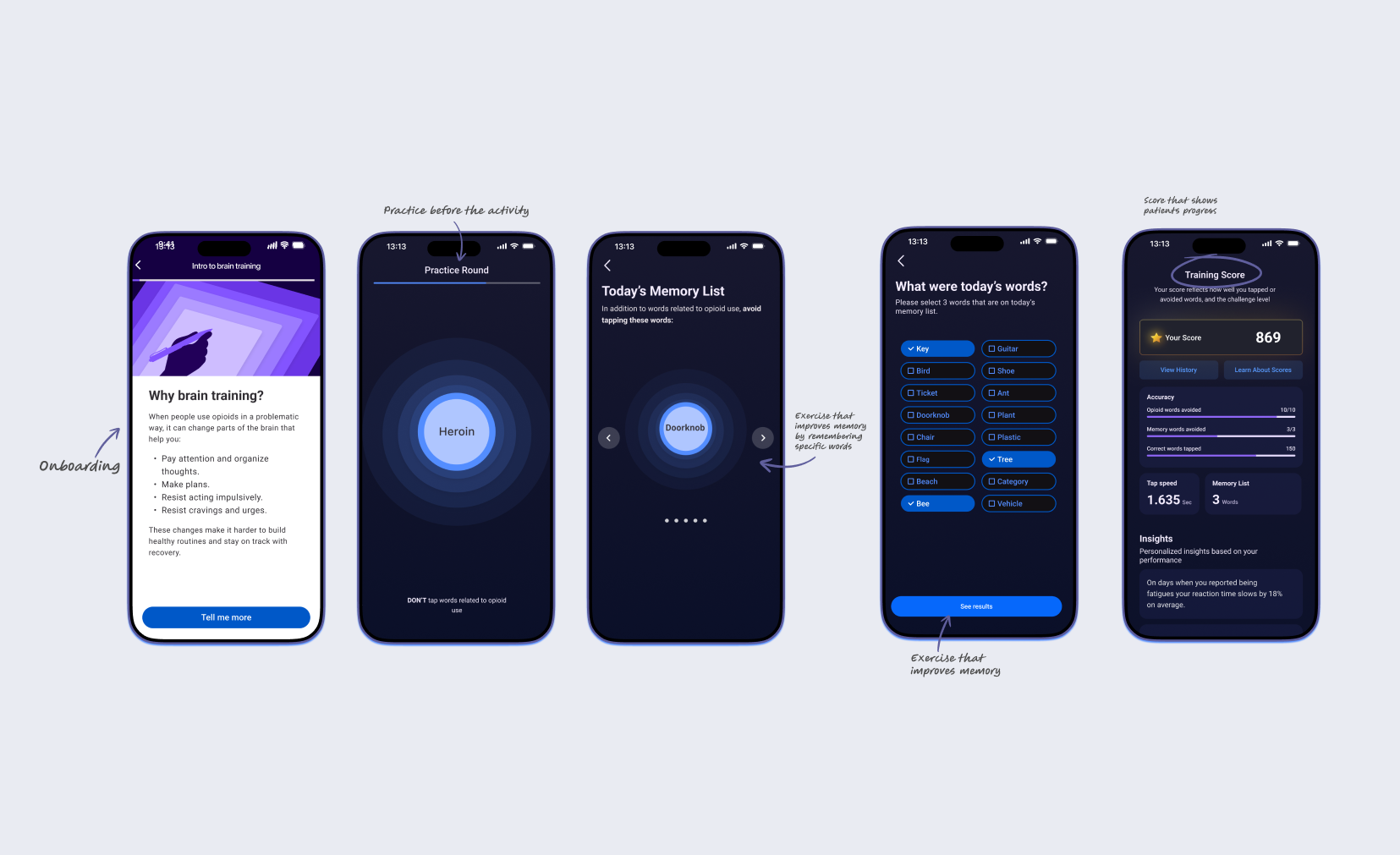
Go/No-Go is a cognitive training activity that helps users strengthen impulse control and working memory through short, focused exercises that promote mindful reactions and support cravings management.
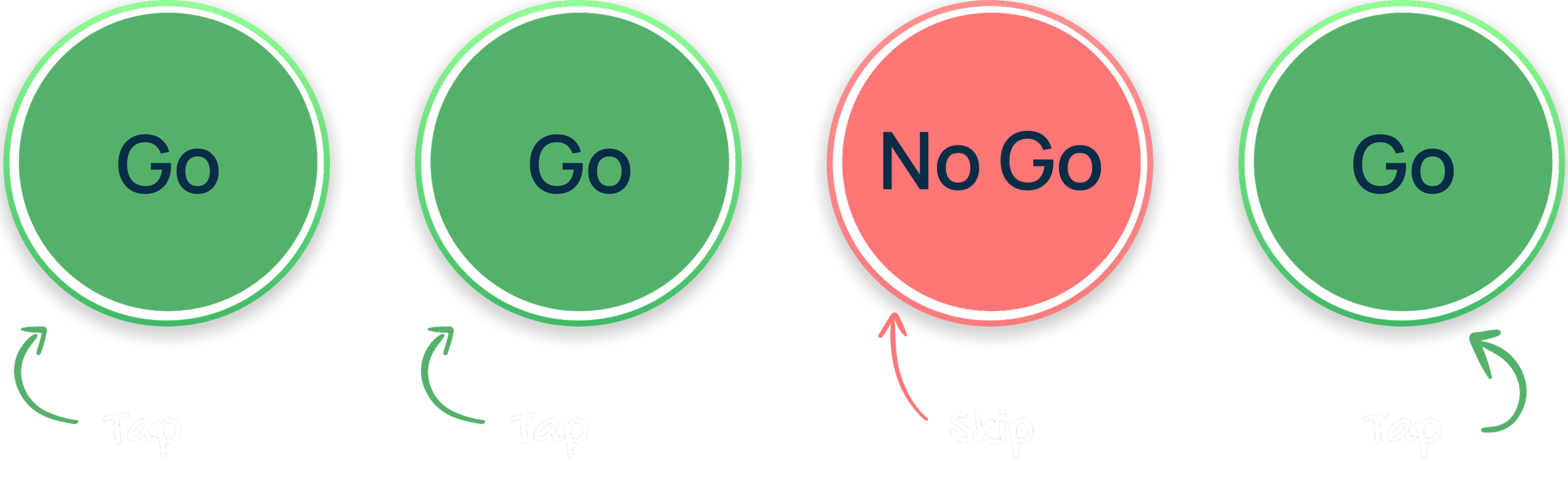
The experience at a glance
How does it help patients?
Go/No-Go gives patients a simple, daily way to practice pausing before acting. Over time, this builds confidence and self-regulation, helping them navigate cravings with more control.
The process started with the exploratory research
We started with exploratory user interviews; we talked to people in recovery, their caregivers, and clinicians.
Methods: Exploratory user interviews, competitive analysis, literature review, surveys, card sorting, and diary studies.
Goal: To understand users’ recovery journeys, uncover their lived experiences, and identify unmet needs.


Findings
Through exploratory interviews and surveys, cravings and support consistently emerged as the top unmet needs. Patients described moments of isolation and loss of focus, revealing opportunities for daily motivation, reflection, and self-regulation tools. These insights reinforced users’ strong interest in support-based features.
“Sometimes you can't think about even hours later because you're thinking so much about the moment. So I love this future focus.”
- Research participant patient
“I could see myself doing that a few times a week. If I'm being like, anxious and needing to calm down and kind of center myself. I could see myself doing that.”
- Research participant patient
Key insights:
Users were highly motivated but struggled to maintain momentum during moments of stress or craving.
Many found existing digital tools overwhelming or impersonal, making it hard to find timely support.
Users wanted quick, compassionate guidance rather than lengthy educational content.
Trust and emotional tone were critical; users responded best to calm, empathetic language and visuals.
Clinicians emphasized the need for consistent, low-friction tools to reinforce recovery routines between sessions.
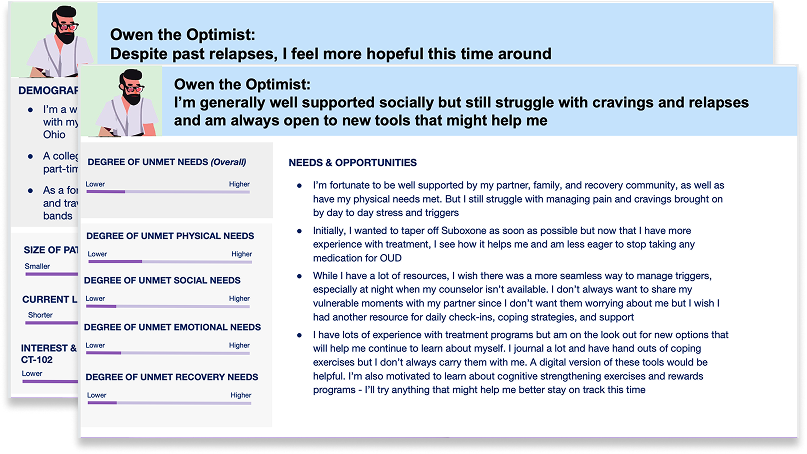
User archetypes
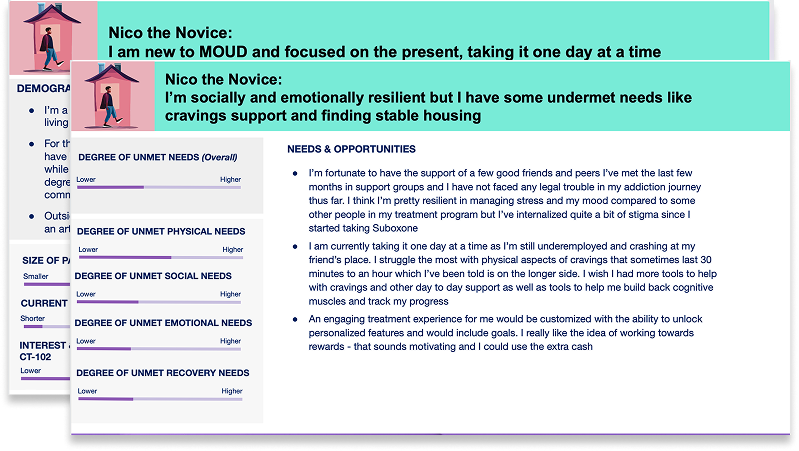
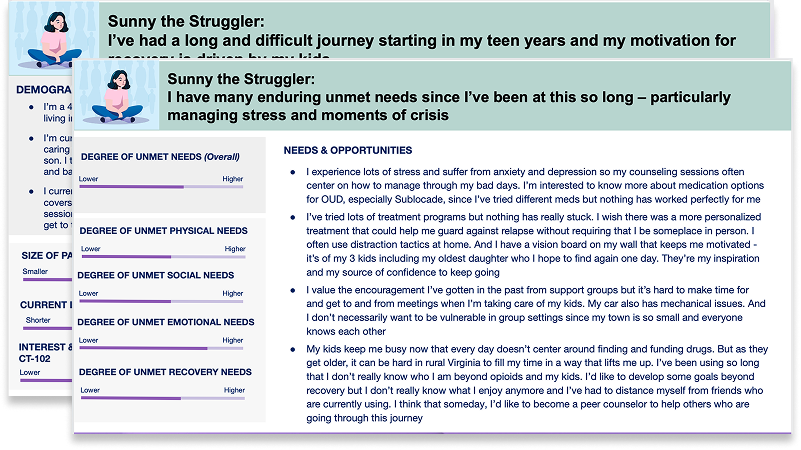
Based on user interviews, we designed 3 main personas. They captured distinct recovery paths but shared the need for gentle accountability and meaningful daily connection.
Product development process
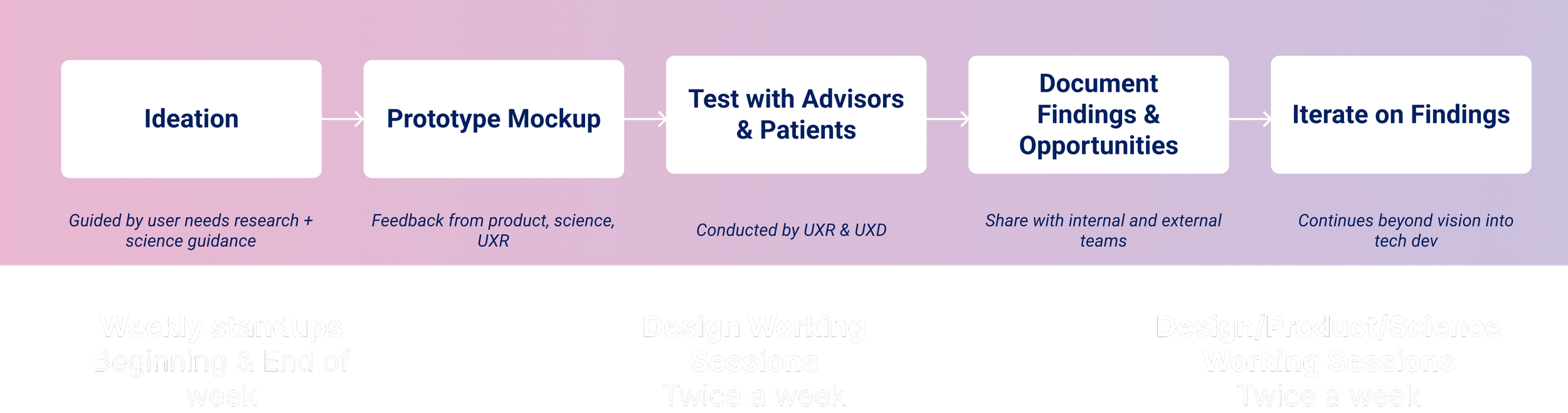
The team maintained a close, collaborative process with weekly working sessions across design, product, and science teams. Regular stand-ups and design reviews ensured alignment, rapid iteration, and consistent integration of clinical and user insights into each design decision.
These findings shaped our problem statement
How might we help people in recovery strengthen motivation and impulse control?
Goals
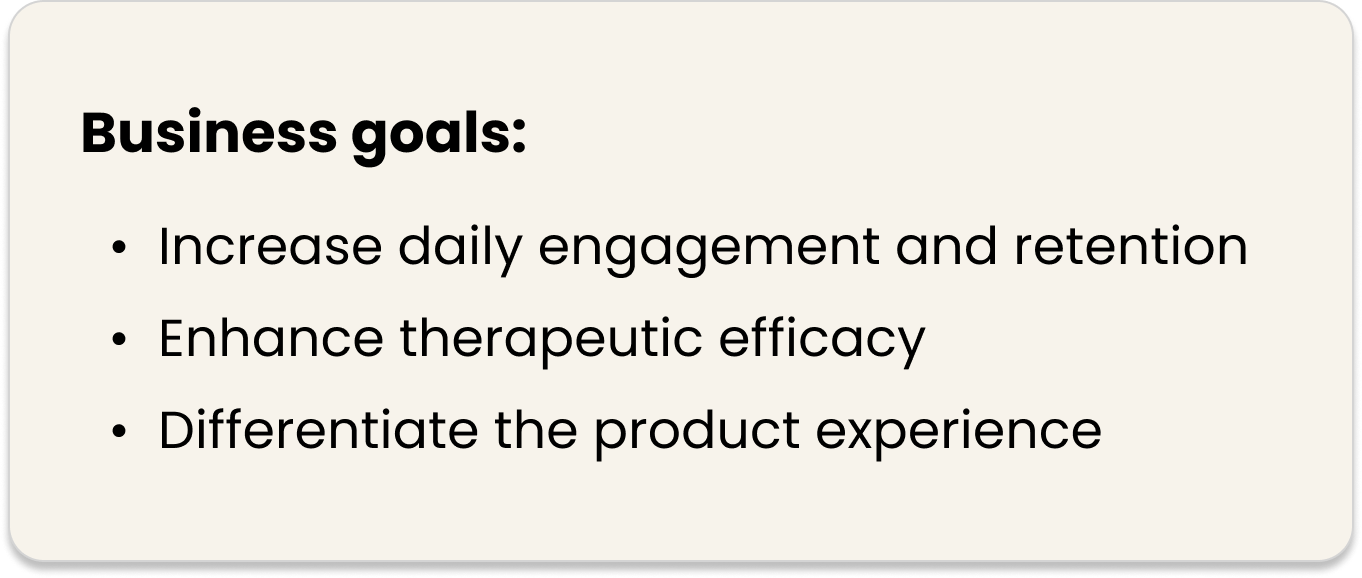
The goal was to translate cognitive science into emotionally engaging experiences that help users stay motivated and in control, strengthening focus through Go/No-Go.

Go/No-Go Journey
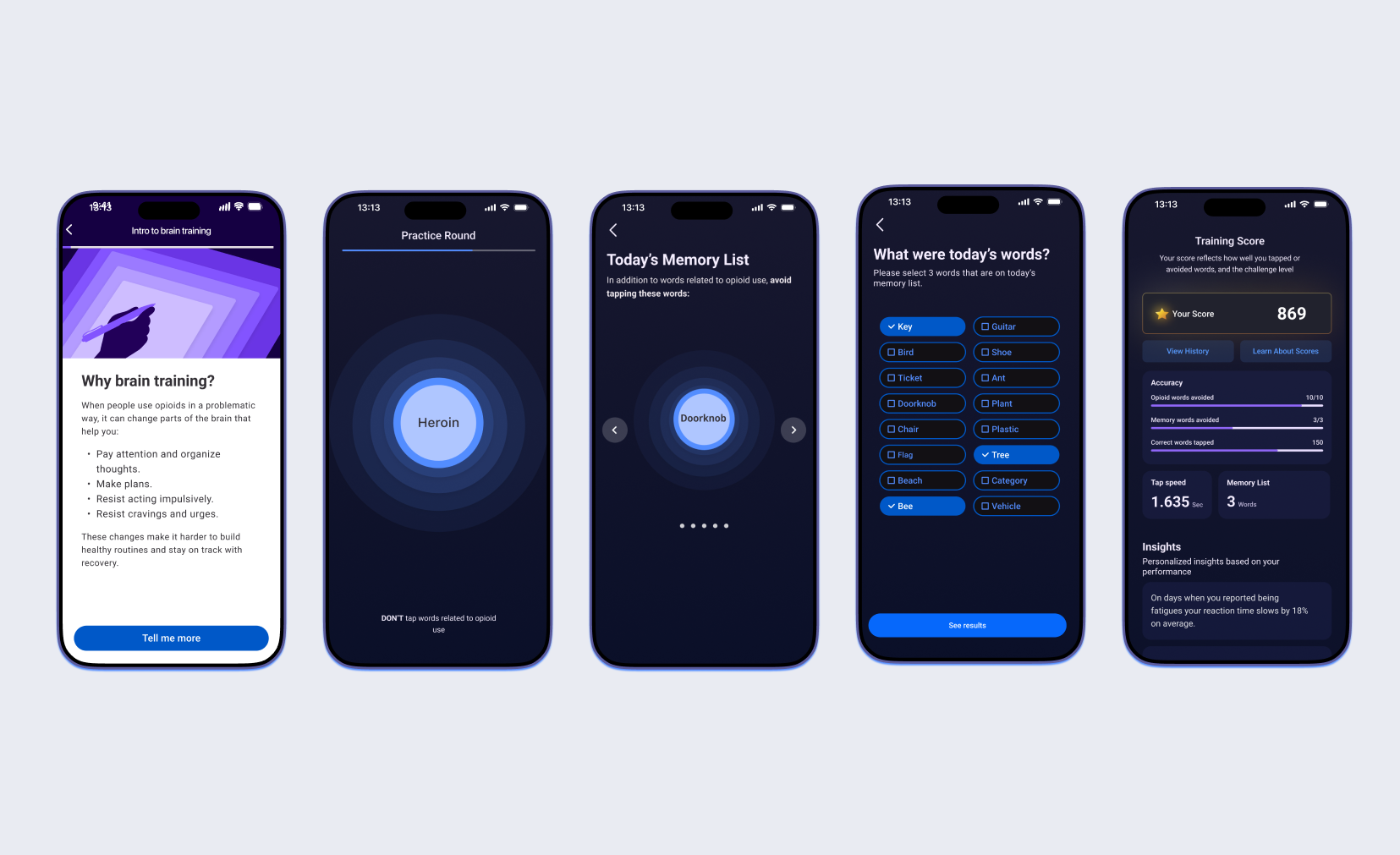
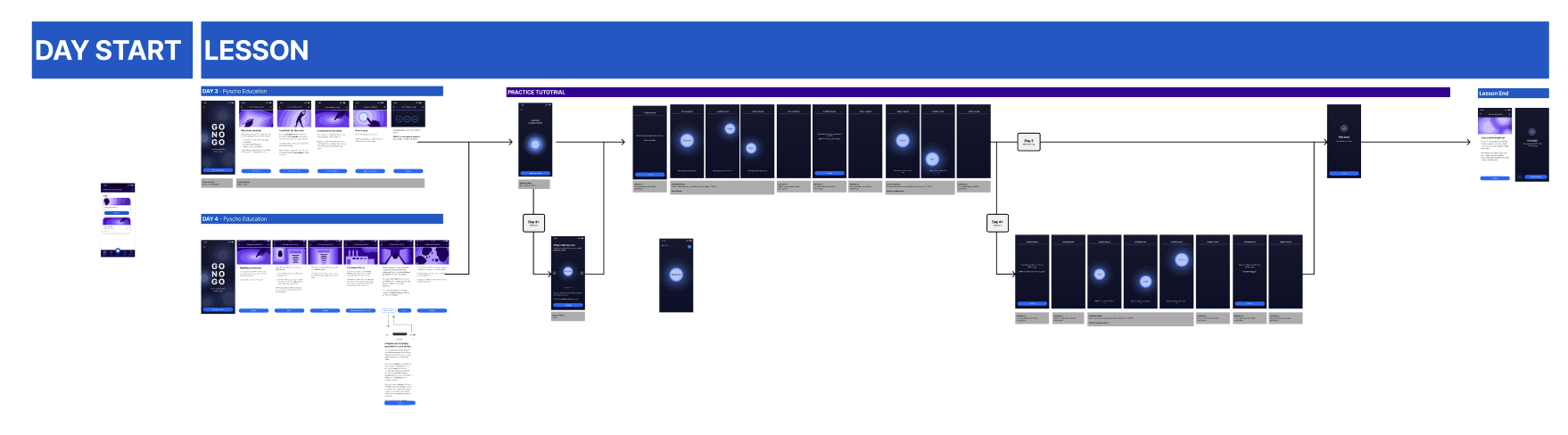
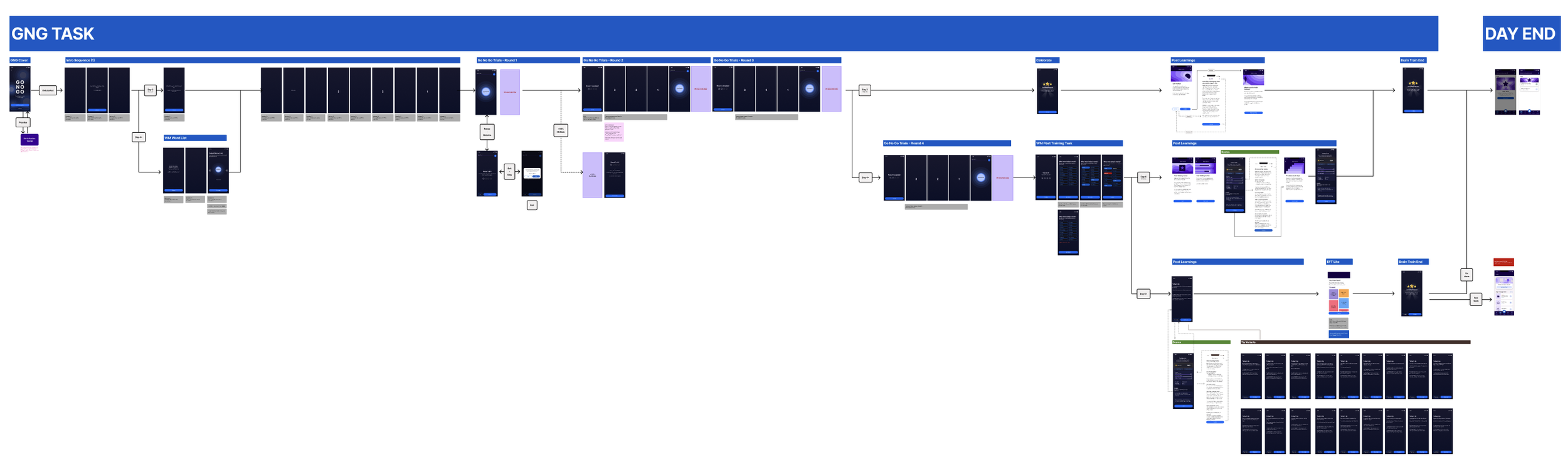
The Go/No-Go experience centers around quick, focused interactions that train impulse control. Visual cues, immediate feedback, and subtle motion keep users engaged, while progress summaries reinforce accuracy and motivation over time.
Clinical user research study
The Go/No-Go underwent a four-week clinical trial to understand how patients interacted with the game. Participants found the experience more challenging and rewarding than expected and wanted to learn more about the science behind how it strengthens cognitive control.

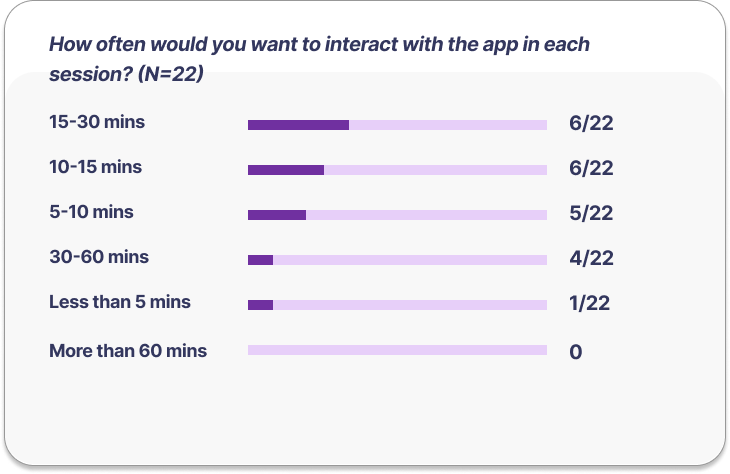
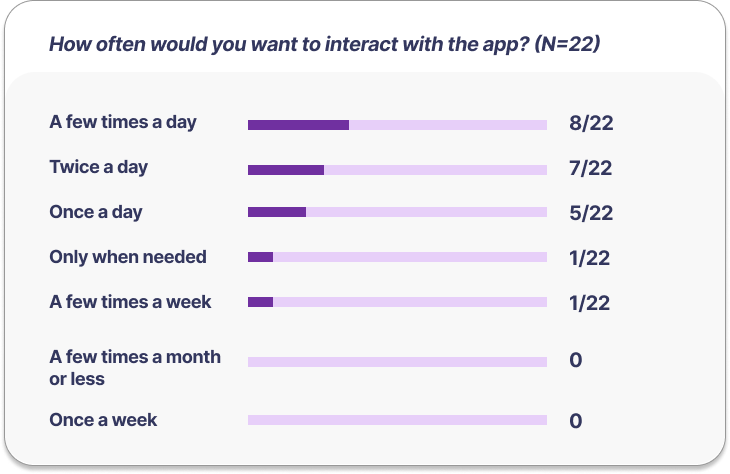
“Keep my mind focused and growing in a positive direction so that cravings become easier to ignore.”
- Patient
“Brain strengthens over time resonates because my memory is horrible. I've never heard that before. I knew you could strengthen your brain but I didn't know that someone who used opioids can do that. I thought that I screwed my brain permanently... it's nice to know that I can come back and to be reminded of that;. most people who have this problem need to be encouraged.”
- Patient
“I love the idea about retraining your brain to function properly without drugs, reframing things, and reworking certain muscles.”
- Patient
Our understanding of the problem evolved through research:
How might we show meaningful progress and let patients know these activities are effective?
It was clear that patients needed a better scoring system to stay motivated and keep coming back.
Design and validation
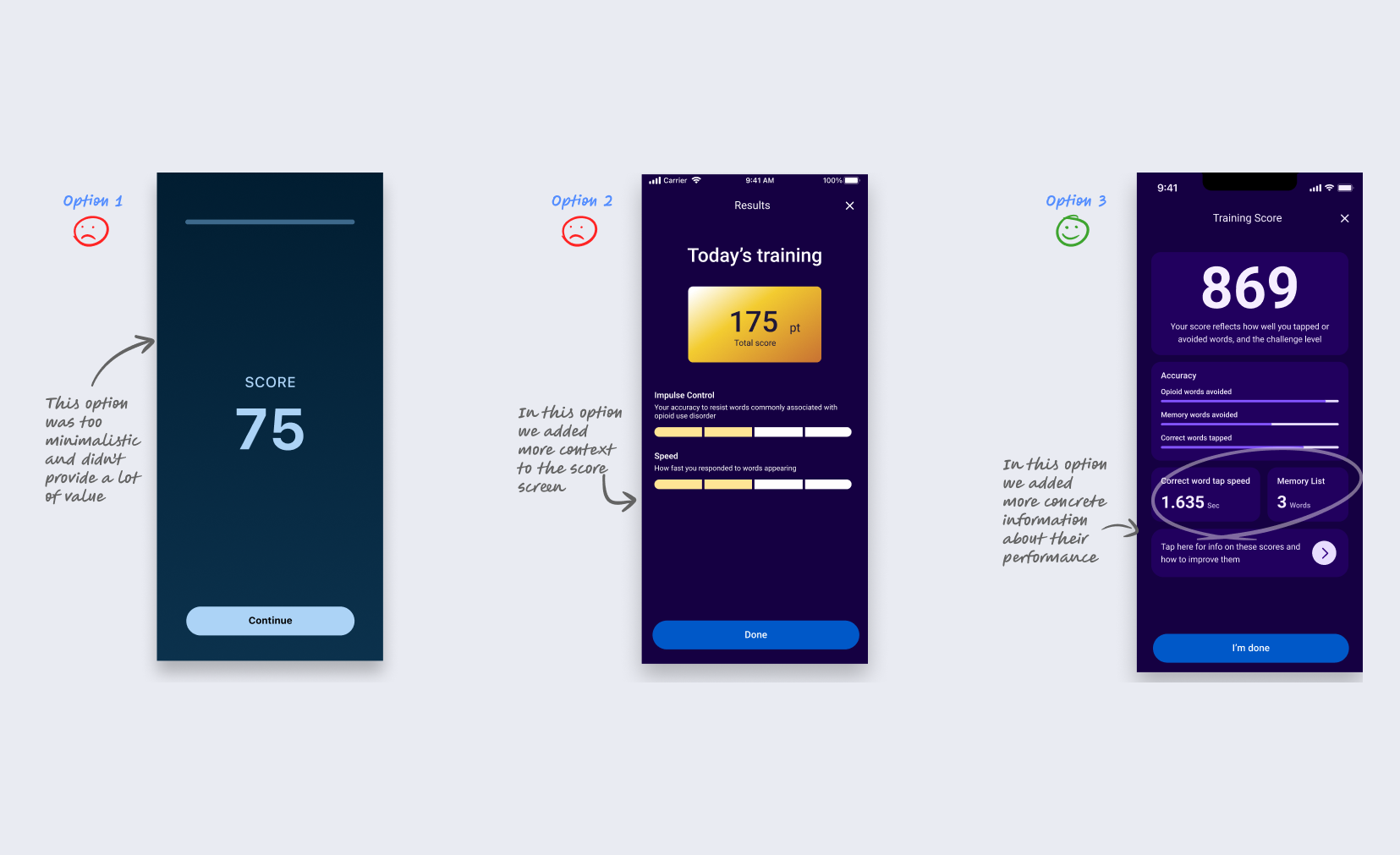
The score screen evolved in response to patient feedback, as users wanted clearer insight into their performance and progress.
Results and scores
Interviews revealed that users wanted clearer feedback and a way to track their progress across sessions, leading us to focus on more transparent performance insights.
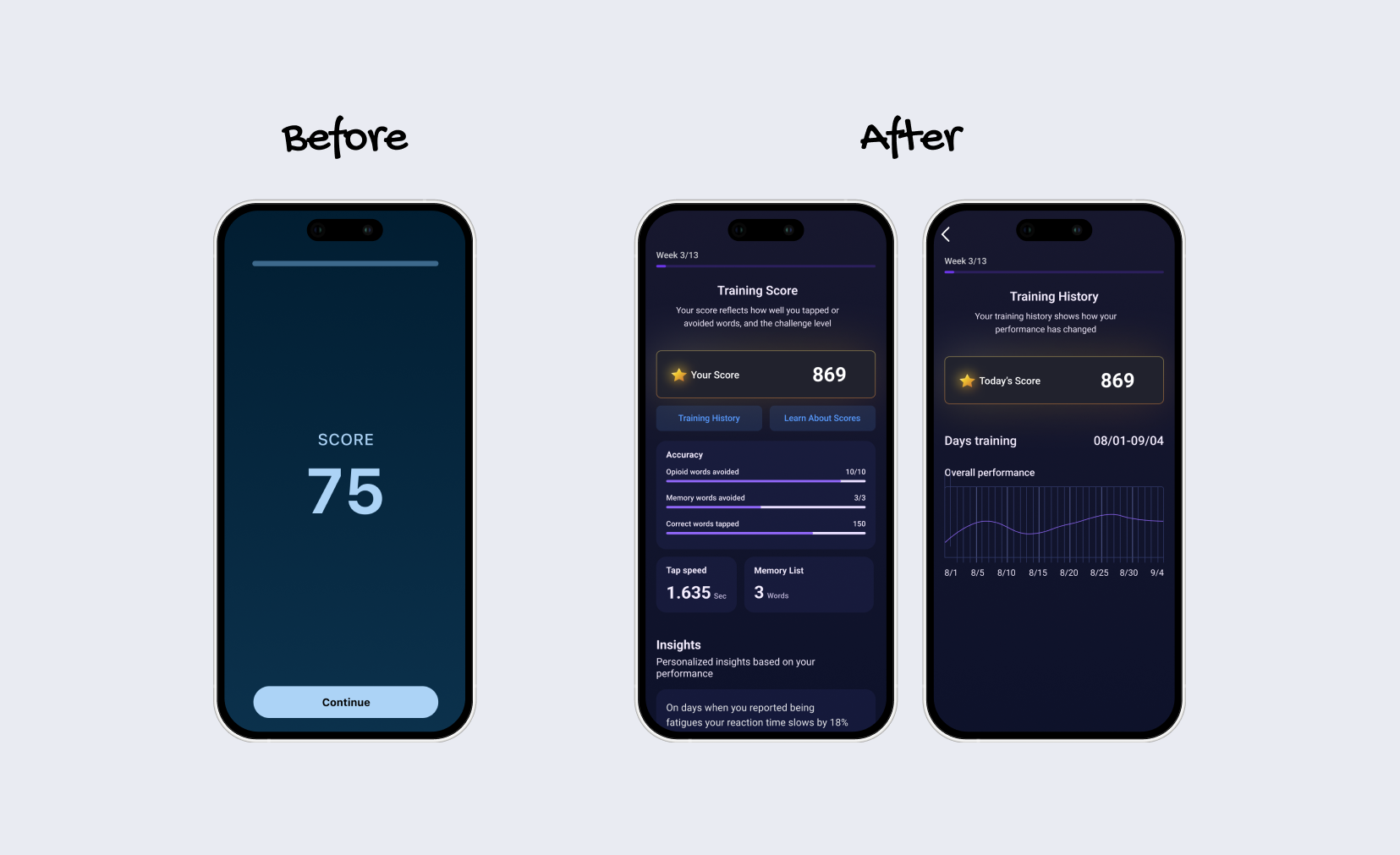
Go/No-Go key screens

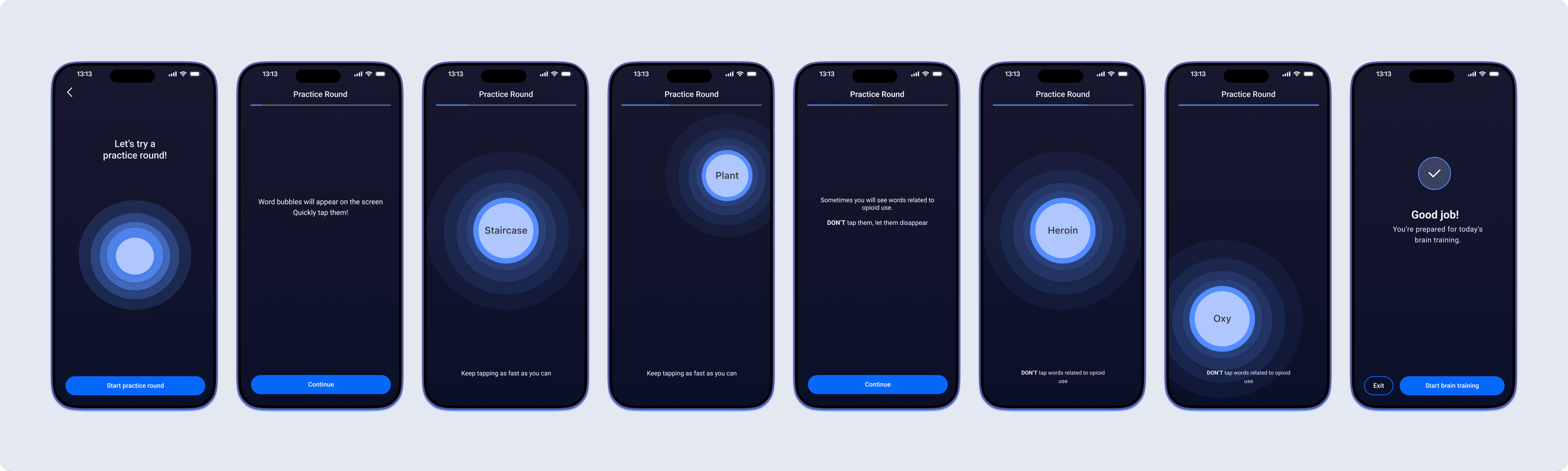
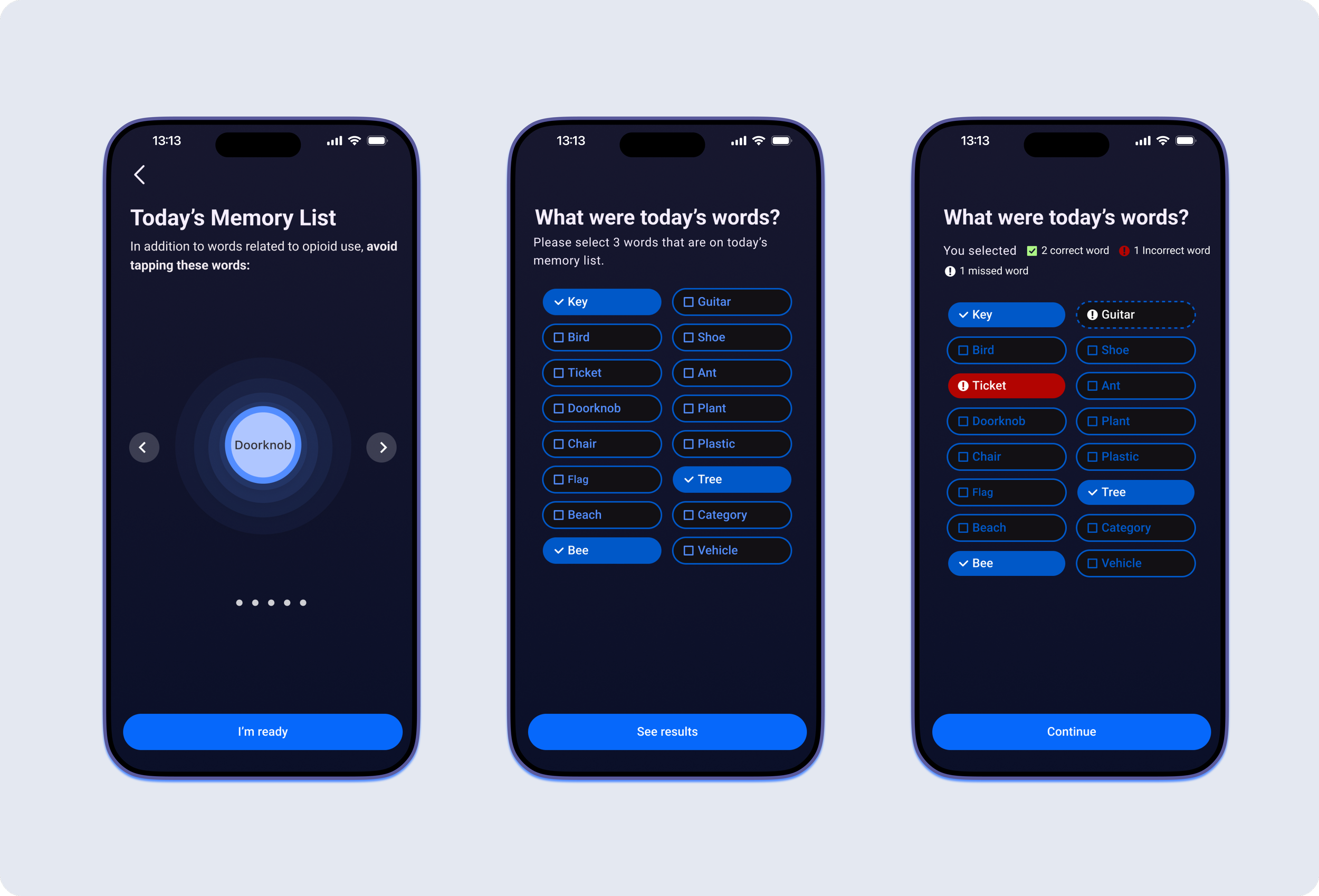
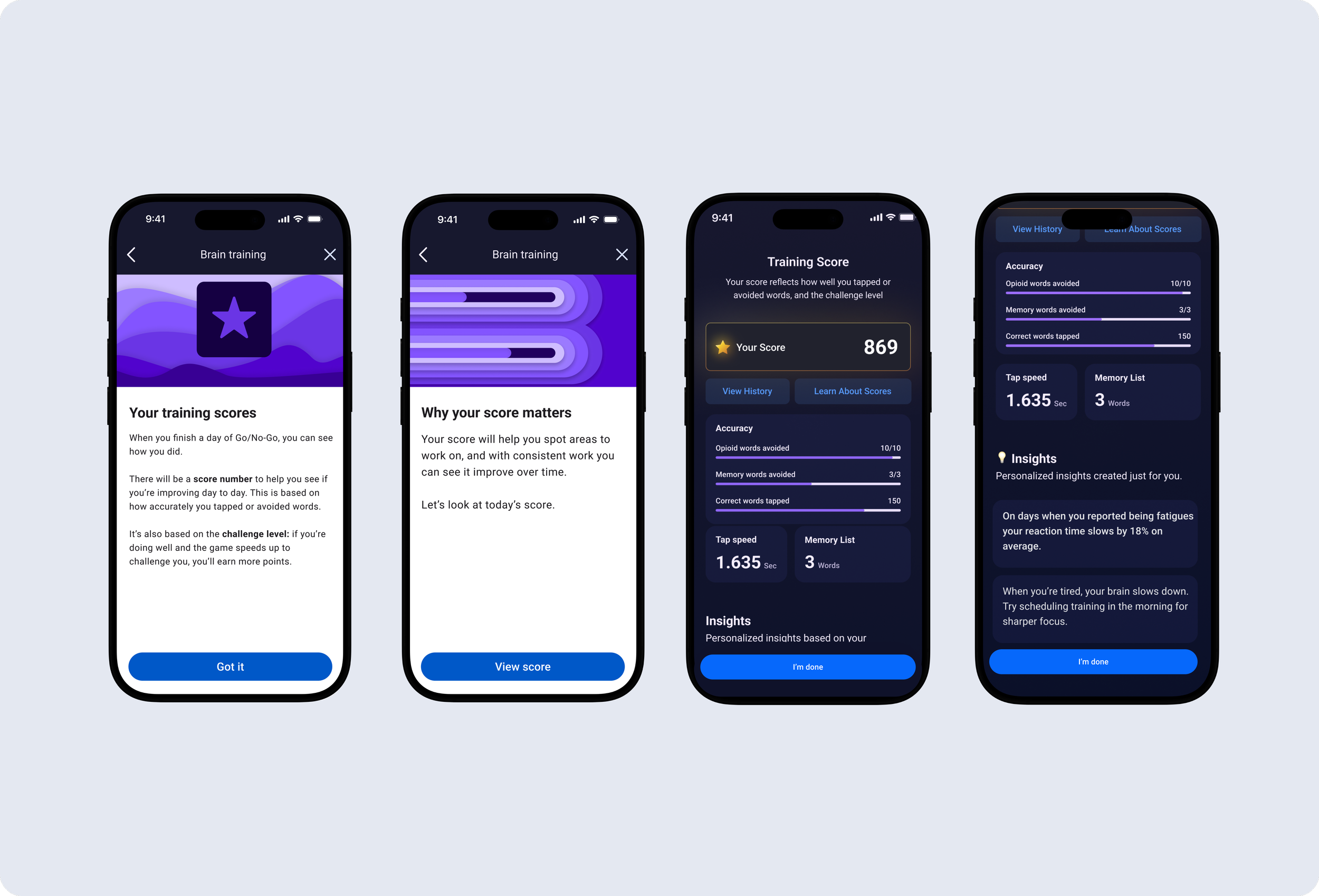
Go/No-Go user journey
Tradeoffs
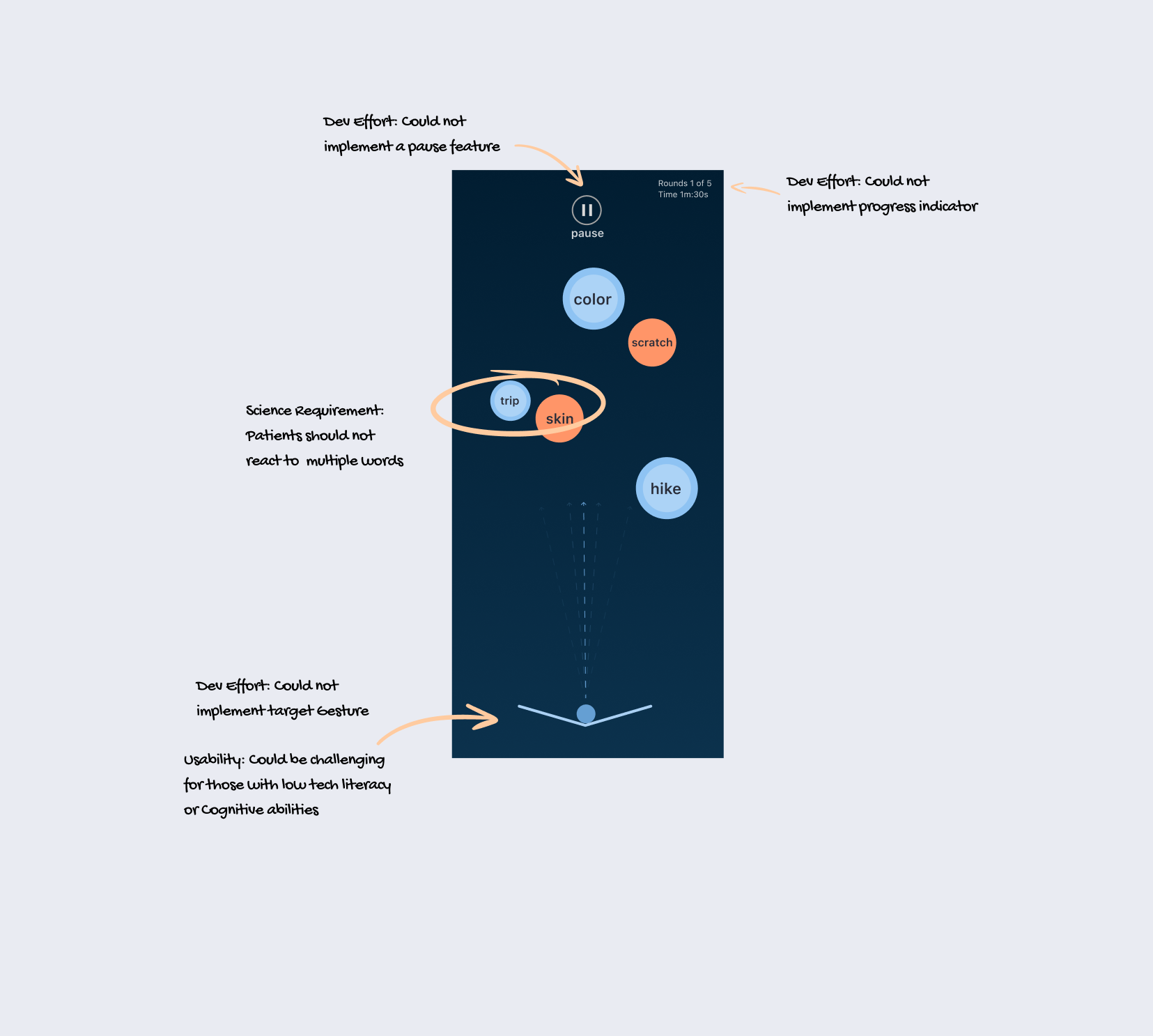
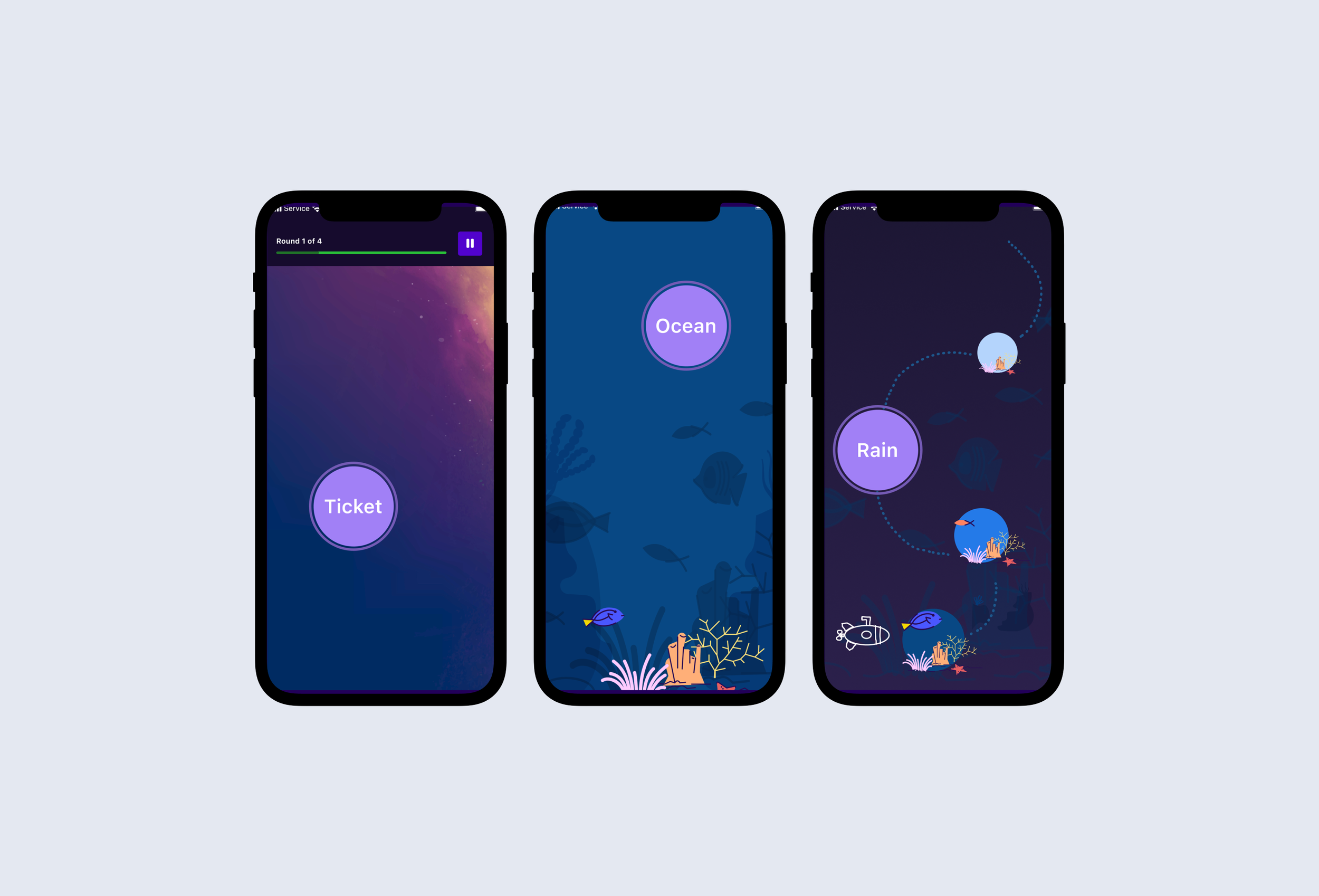
While deeper gamification was explored, we intentionally scoped the MVP to a simpler interaction model to meet scientific validation requirements and ensure reliable measurement of behavioral impact.
Impact & Outcomes
User Impact
User testing confirmed strong engagement and emotional connection. 80% of participants said the brain training features helped them stay motivated and connected to their recovery goals, while 70% said they would use the app daily.
Business Impact
Early feedback validated brain training as an effective behavioral strategy for sustaining motivation between therapy sessions. These insights guided Phase 2 planning and secured further product investment.