
Click Therapeutics - Go No/go Mobile app
Improving focus through cognitive training

Project background
At Click Therapeutics, I led the design for Go/No-Go, a therapeutic game aimed at helping adults with opioid use disorder enhance impulse control and emotional regulation.
Our team integrated cognitive behavioral therapy principles into engaging, short sessions to make therapy more accessible and improve adherence for clinical validation.
Through gamified feedback loops, we encouraged daily progress, leading to reports from participants of feeling more "in control" and "less reactive." Engagement metrics significantly increased, with clinical teams identifying Go/No-Go as a top feature in the app's early MVP phase.
What is Go No/go?
The Go/No-Go activity was designed to make therapy both effective and engaging. It builds autonomy through small wins, strengthens working memory, and trains impulse control by helping users pause before reacting to triggers.
As an interactive daily exercise, it keeps users engaged while supporting cravings management through focus and redirection.
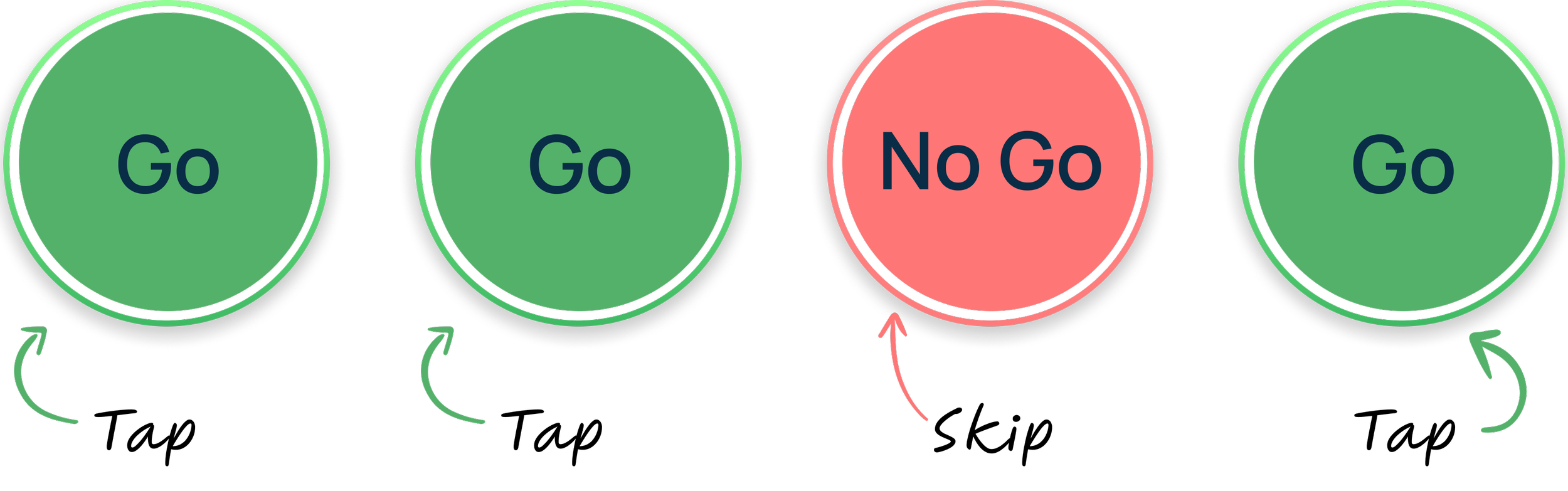
User journey
User journeys outlined how players move through focus, action, and feedback phases, guiding design decisions that improved flow and sustained engagement.
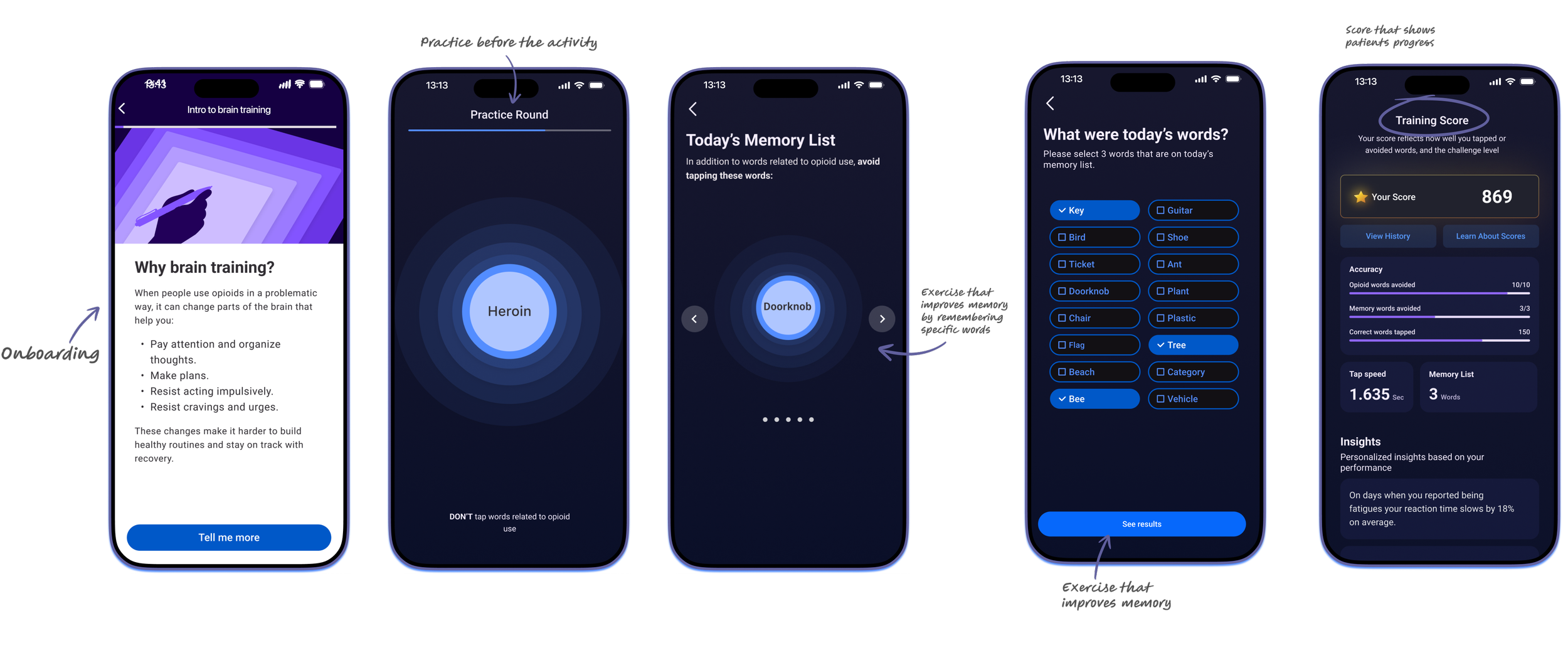
Early design explorations
Initial concepts were guided by research and clinical requirements, then refined through iterative testing.

User research
Go/No-Go underwent a four-week clinical trial to understand how patients engaged with the game. Participants found the experience more challenging and rewarding than expected and wanted to learn more about the science behind how it strengthens cognitive control.

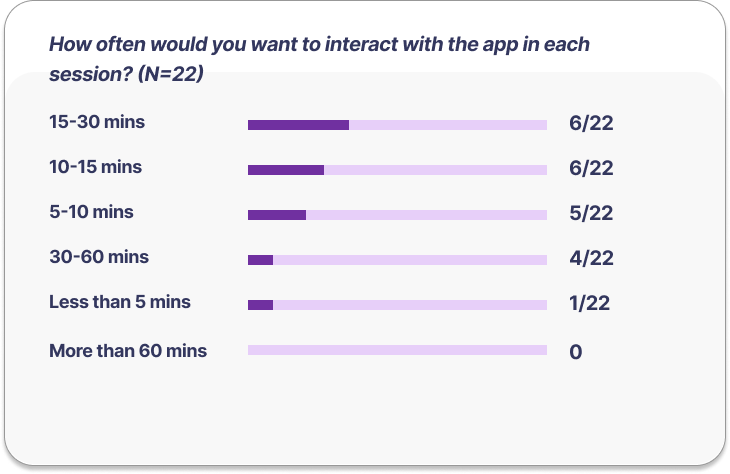
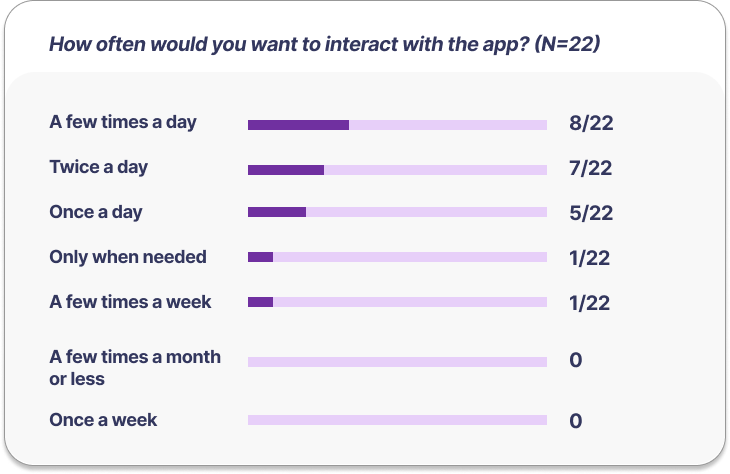
“Keep my mind focused and growing in a positive direction so that cravings become easier to ignore.”
- Patient
“I love the idea about retraining your brain to function properly without drugs, reframing things and reworking certain muscles.”
- Patient
Our understanding of the problem evolved through research:
How might we show meaningful progress and let patients know these activities are effective?
It was clear that patients needed a better scoring system to stay motivated and keep coming back.
Design and validation
The score screen evolved in response to patient feedback, as users wanted clearer insight into their performance and progress.
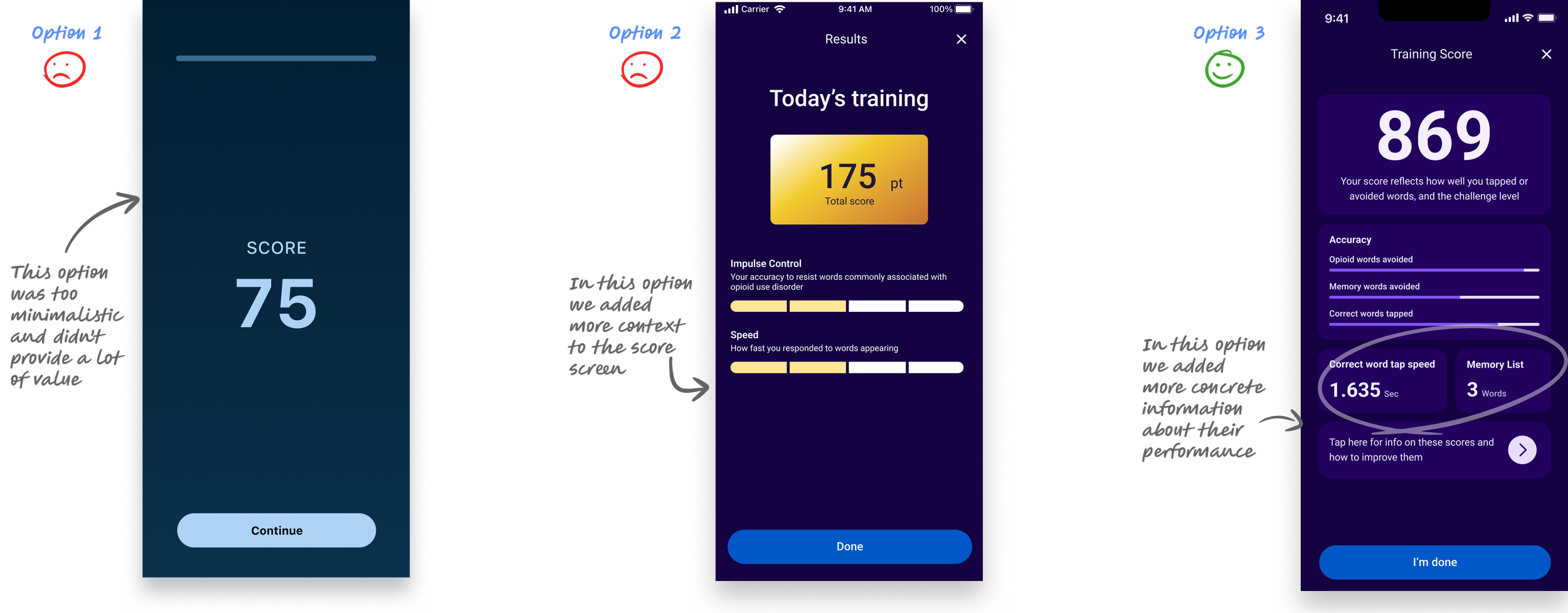
Score
Based on feedback from user testing, I made the following updates. I included details on their performance and added a feature to monitor their progress.
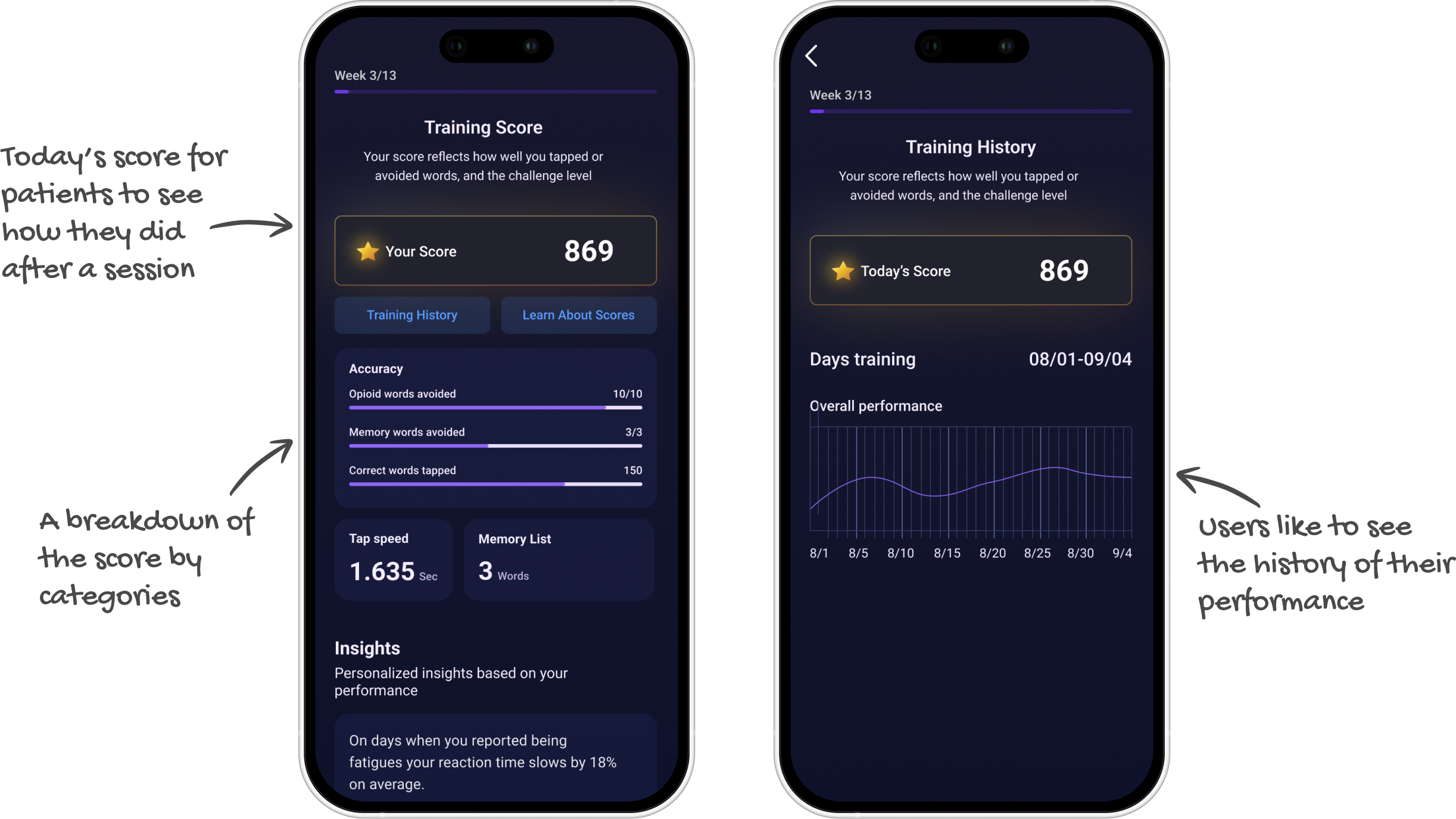
Results
User outcomes: 70% of participants said they would use the app daily; users reported feeling more in control and encouraged by the idea that their cognitive function could improve over time.
Business outcomes: Insights from early testing secured client buy-in and Phase 2 funding; testing showed notable gains in task accuracy and response speed.