

Click Therapeutics - Support
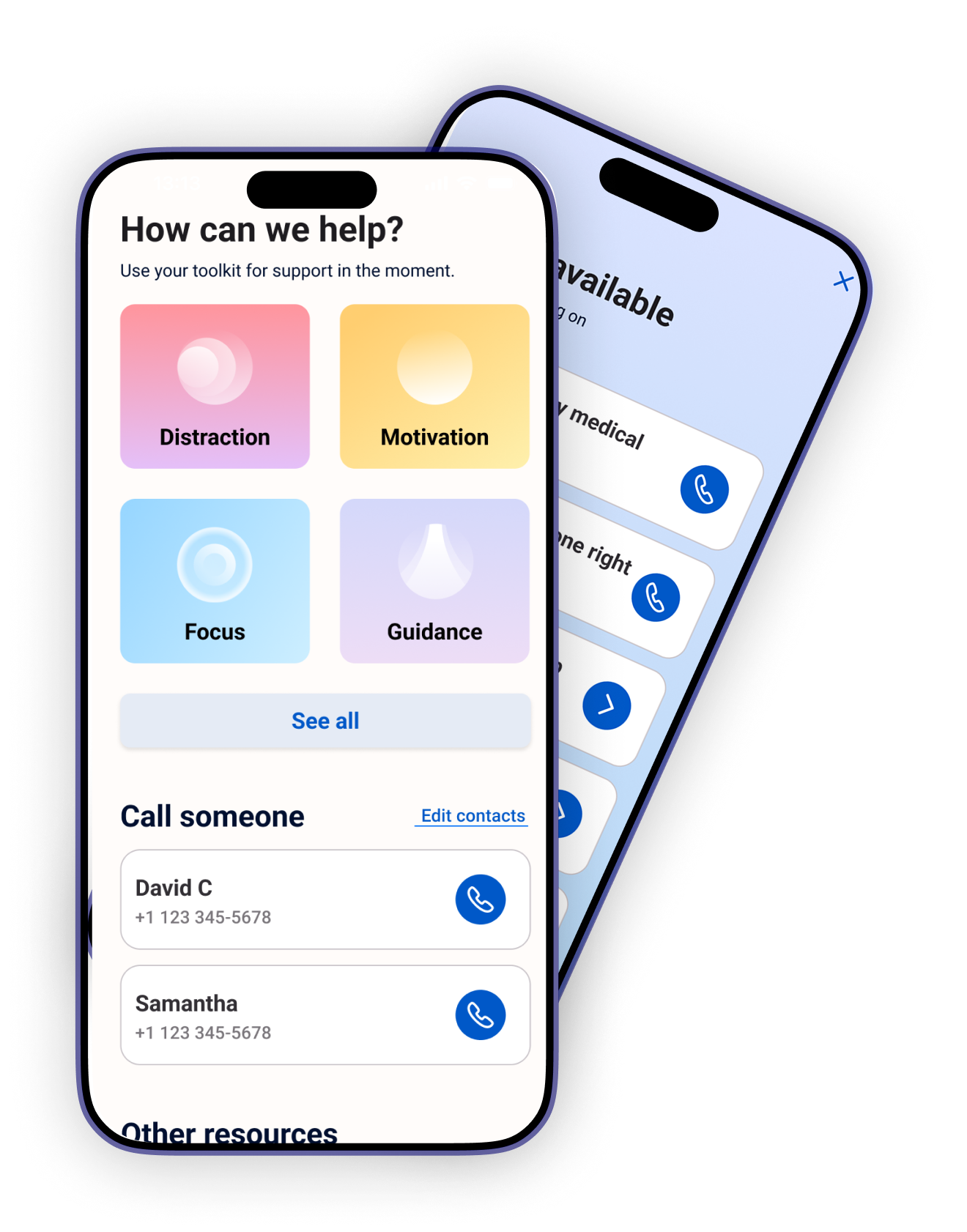
Improving recovery outcomes through real-time, support
Project background
At Click Therapeutics, a biotech company, I led the design of a just-in-time support feature for individuals managing opioid use disorder, providing immediate guidance during moments of craving or stress.
The challenge that people in recovery face is the unpredictability of urges. Existing digital therapies often fall short when users need real-time help.
Our goal was to design a system that anticipates need, offers grounding guidance, and builds trust, delivering timely, compassionate support without overwhelming users.
As a result of this feature, 80% of participants said the new Support tab made it easier to find help in moments of craving or distress. 70% reported they would use the feature daily as part of their recovery routine.
My role: Lead Product Designer | Duration: 4 months | Team: UX Research, Product, Clinicians, Engineers
First steps
Research
Methods: user interviews, competitive analysis, card sorting, and clinician input.
Goal: understand triggers, trust barriers, and coping preferences.
We interviewed patients, clinicians, and caregivers to map the emotional and behavioral journey of recovery.
We also reviewed 8 mental health and recovery apps to identify patterns in how they surface interventions.
Card sorting
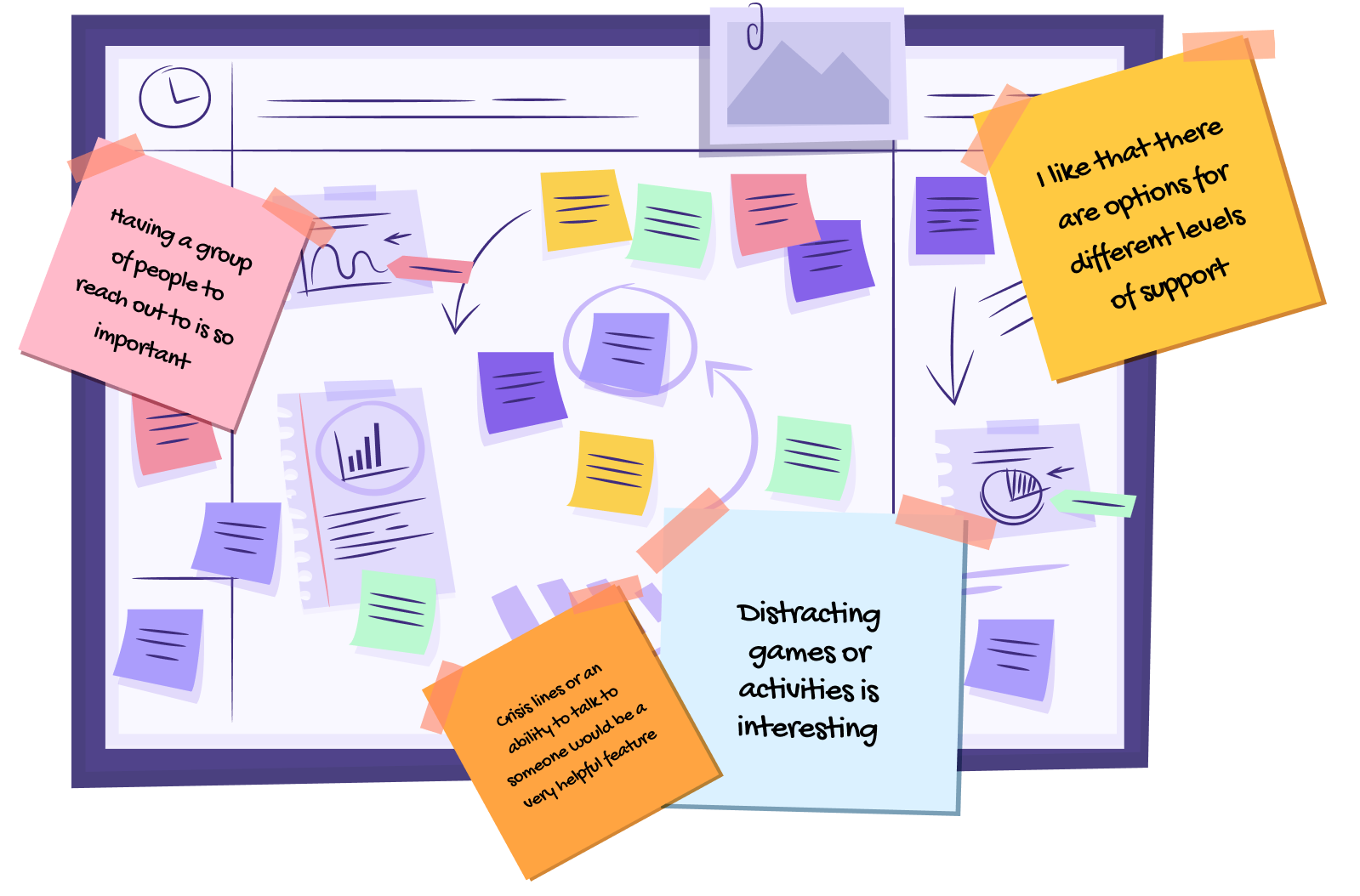
We conducted a card sorting activity in addition to interviews to determine what features users were looking for on the support screen.
Key insights
We learned that most participants wanted to see these features:
• 77% Crisis lines
• 78% Phone numbers of personal support contacts
• 65% Resources for relapses
“Sometimes I don’t want to call anyone. I just want to ride it out on my own without feeling judged.”
- Research Patient
“When a craving hits, I don’t want to scroll I just need something right there to help me calm down.”
- Research Patient
These findings shaped our problem statement:
How might we deliver real-time, compassionate & supportive interventions?
Exploring early directions
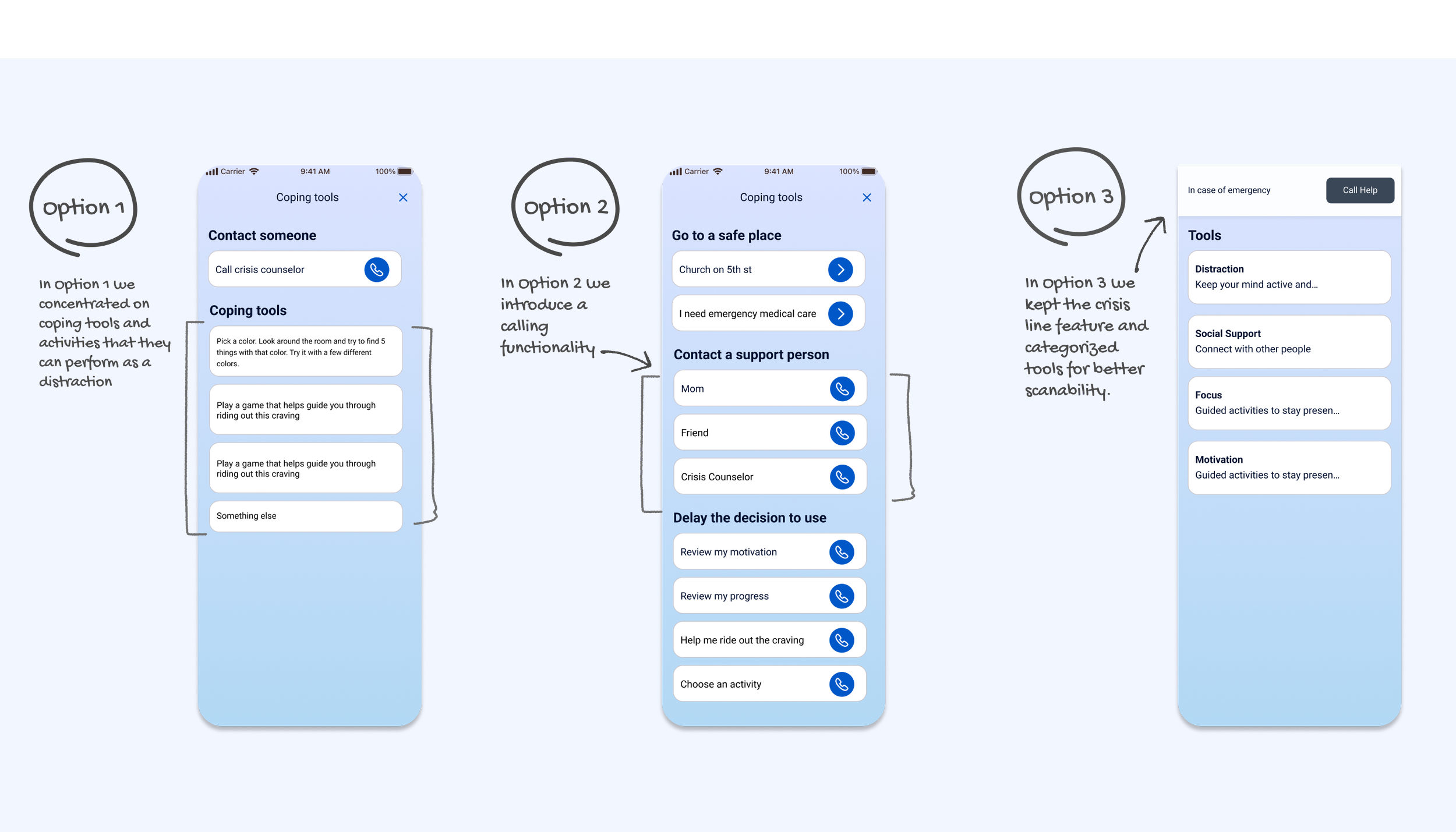
Explored early iterations to define the most valuable content and actions for users. Insights from interviews guided which elements to prioritize on-screen, ensuring clarity and immediate relevance during real-world use.
Testing and feedback
Users responded positively to the calming tone and simple hierarchy but wanted faster access to the tools they use most. We refined the entry point to minimize friction, added a single tap to access coping content, and included a persistent home icon for reassurance.

Refining for accessibility and clarity
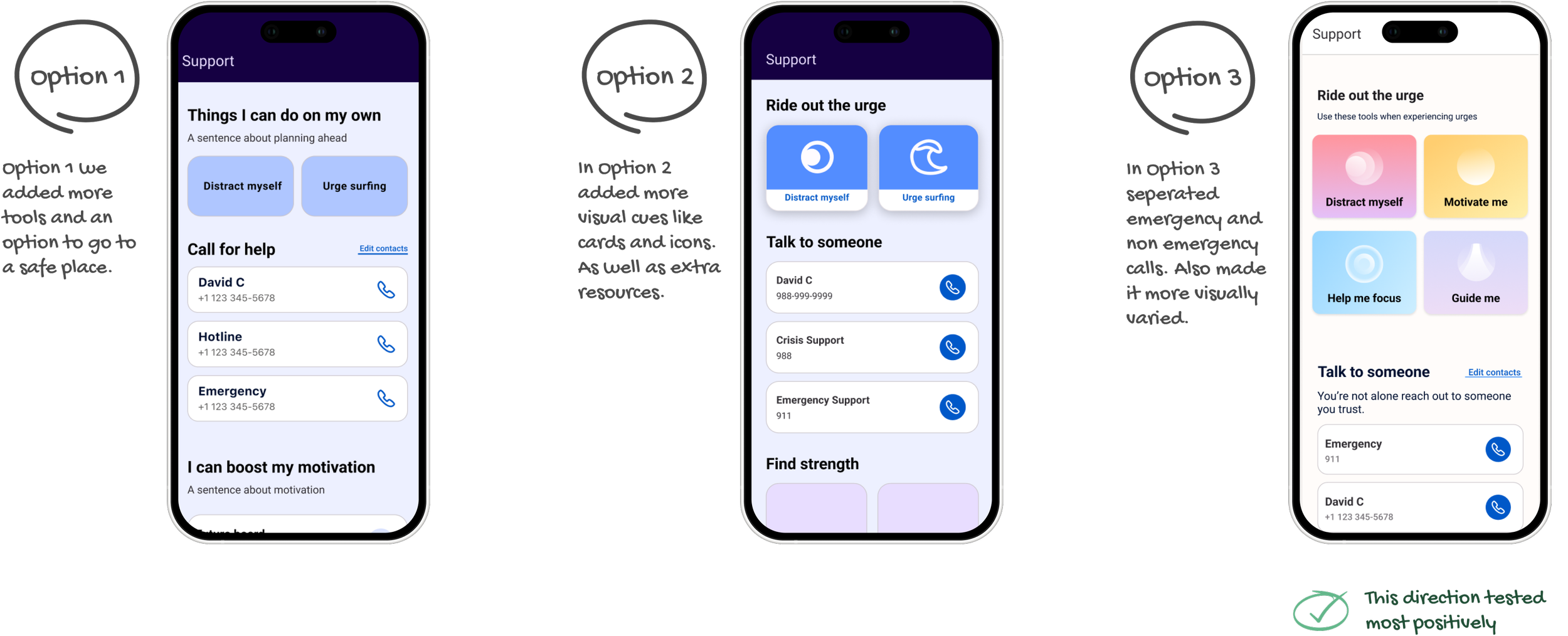
At this stage, the goal was to structure options more clearly, making it easier for users to scan and choose quickly.
Integrating legal feedback
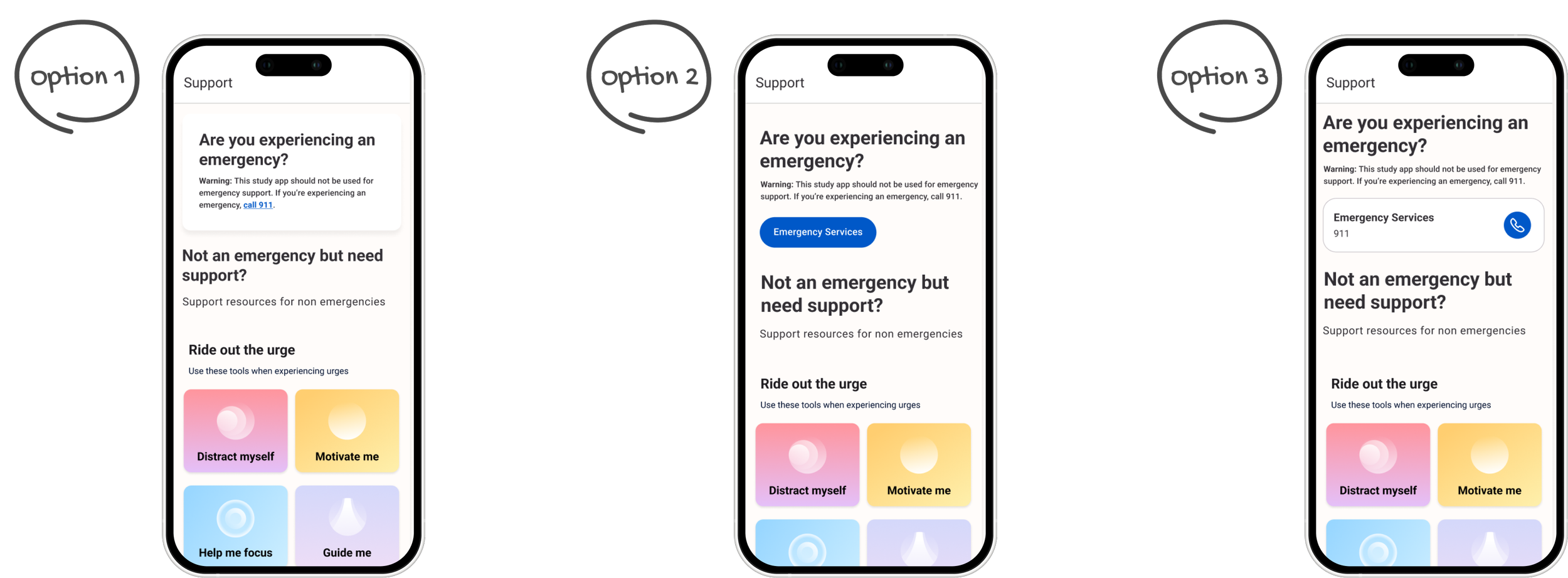
Versions proposed by the legal department to meet compliance requirements.
Validating design updates
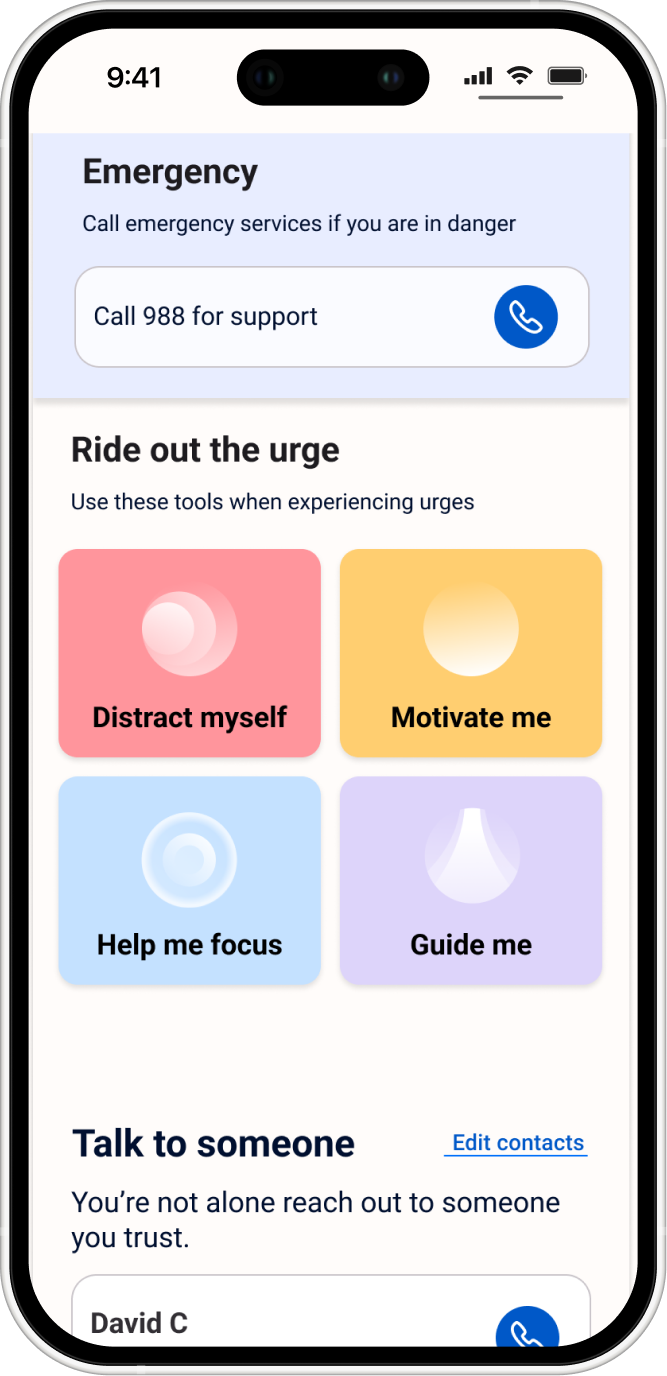
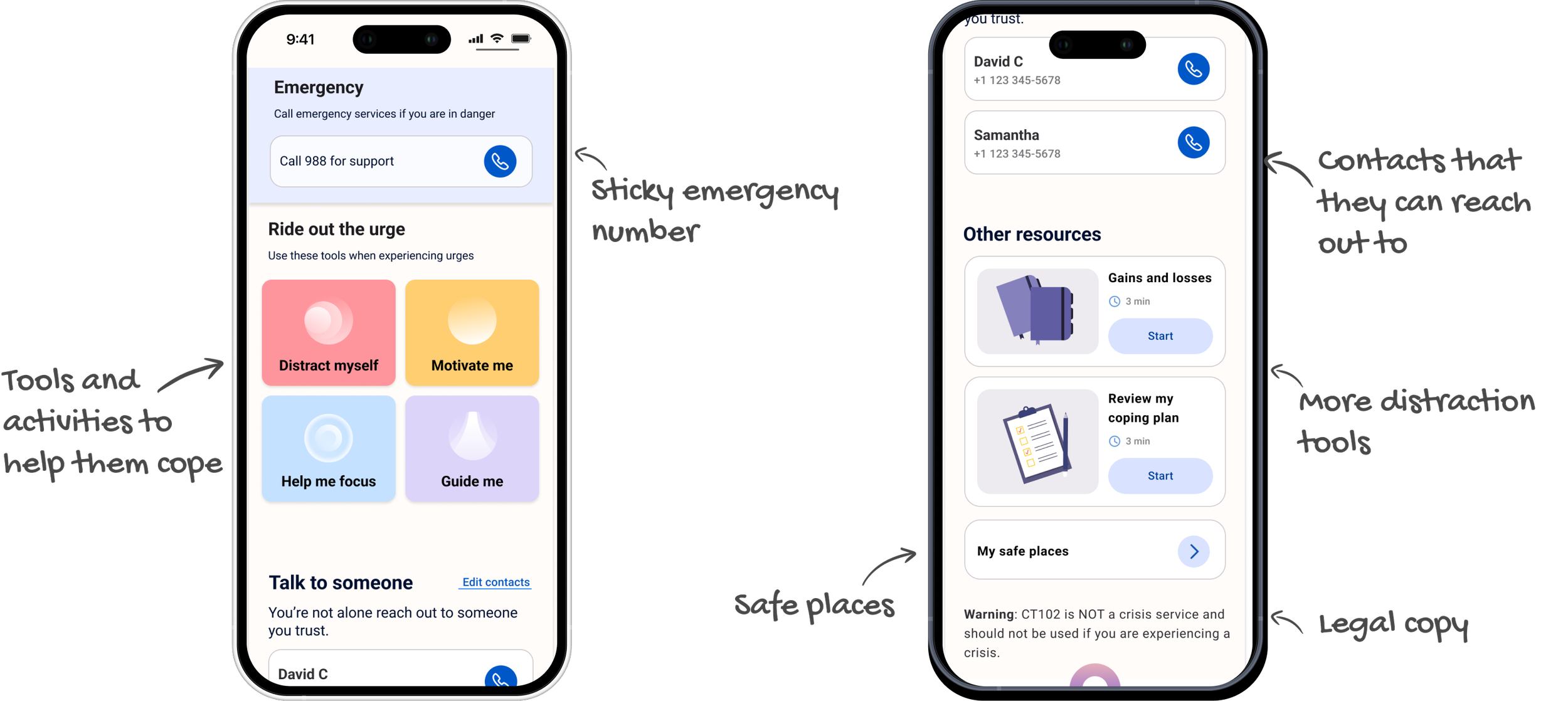
The extensive legal copy risked overwhelming users in moments of distress. To preserve clarity, we split the language from the emergency action, ensuring help remained easy to find when it mattered most.
“Before, my cravings felt out of control. Now I feel like I have a way to pause and take back a little control when things get hard.”
- Research Patient
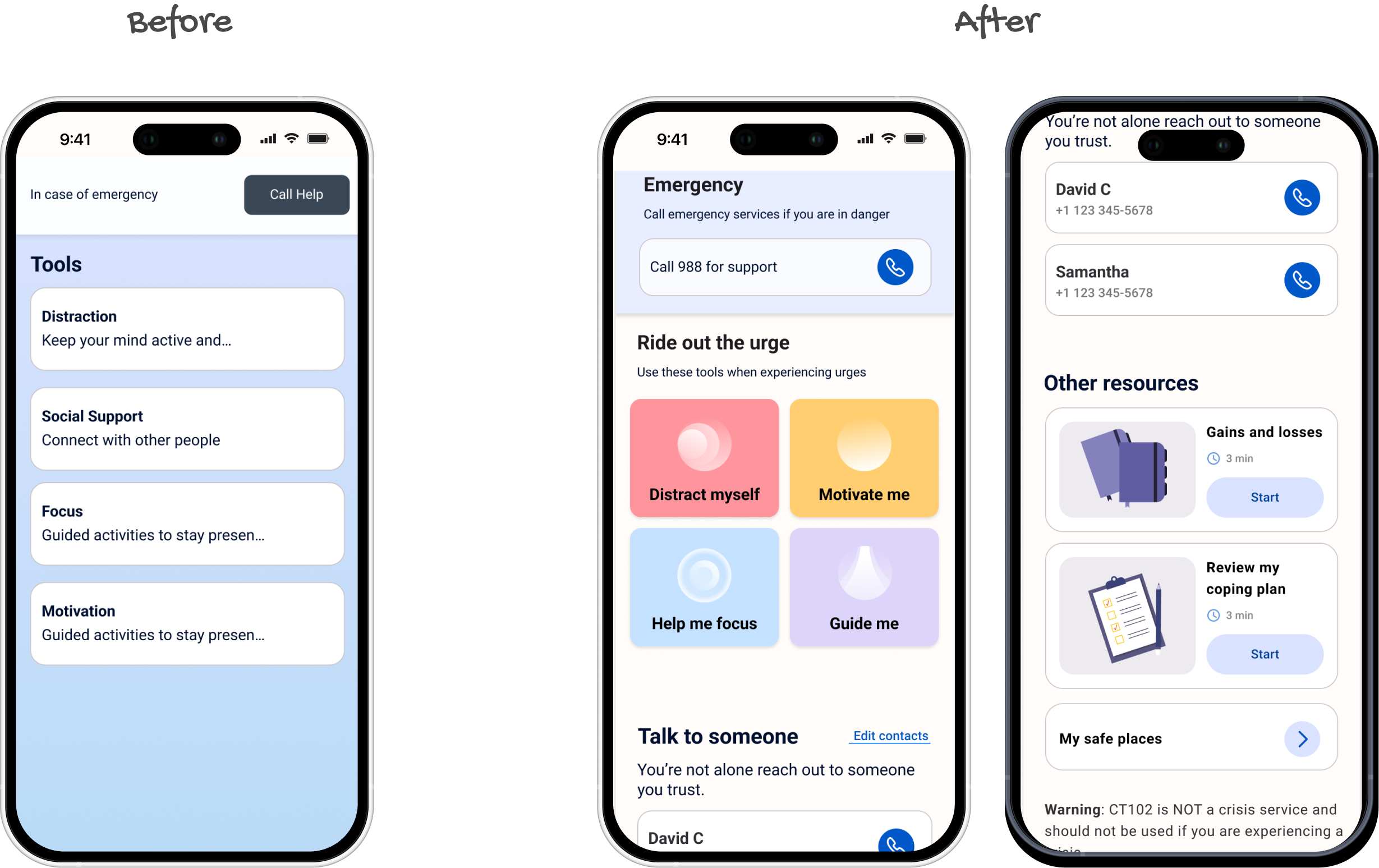
Before & after
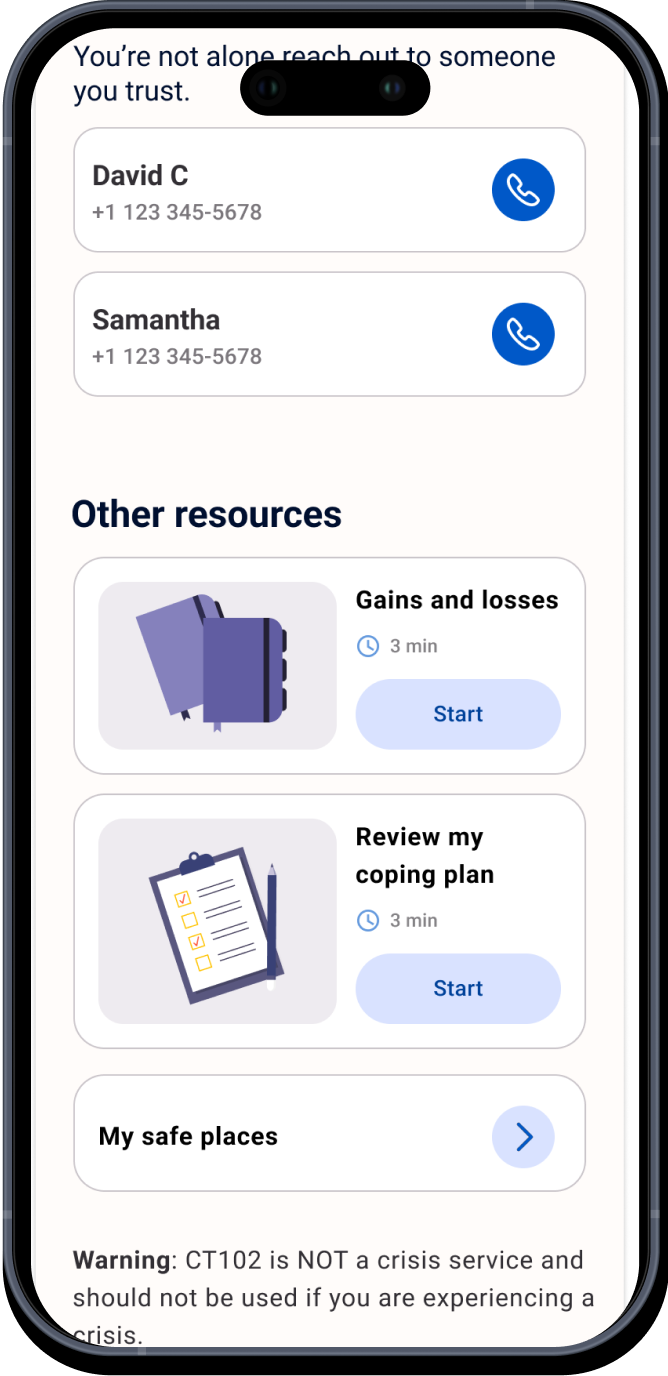
The original experience lacked clarity and a clear hierarchy, making it harder for users to complete key actions. The redesigned flow improves visual organization, readability, and guidance, helping users navigate with confidence.
Outcomes and Results
73% of participants said the new Support tab made reaching the right kind of help easier in moments of craving or emotional distress.
User Impact:
Participants described feeling calmer, safer, and more in control when experiencing stress or cravings. The structured flow from urgent helplines to guided coping tools and reflective exercises helped them access support immediately without second-guessing what to do.
Business Impact:
Early testing confirmed the feature’s effectiveness and alignment with clinical strategy. The strong participant engagement and positive feedback helped the team secure buy-in for continued product investment and Phase 2 development.